
The world’s largest salmon producer stands accused of a charm offensive in the Scottish Highlands that distracts from its “noisy” and “polluting” fish farms.
Seafood giant Mowi produces more than a fifth of the world’s farmed salmon and is the market leader in Scotland, where it farms a third of the country’s salmon and made £97 million in profits last year.
Mowi, which also produces the feed for its farmed fish, boasts of “playing an important role in […] leading the planet’s blue revolution” through the 48 farms it operates in “cold and clear Scottish Highland waters” while chief executive Ivan Vindheim says the company “embrace[s] sustainability”.
But residents and fishers living and working near several of Mowi’s farms claim the company is in fact a source of pollution. Nearly a third of the firm’s salmon farms are located in marine protected areas where, critics believe, Mowi’s operations pose a threat to vulnerable aquatic species such as the red seaweed maerl.
Among locals’ complaints are the noise, bad smells and light pollution from Mowi’s farms, and the use of toxic chemicals in the water to kill sea lice that plague farmed salmon.
Documents obtained by DeSmog also reveal that one of Mowi’s farms has repeatedly breached legal limits for the anti-sea lice chemical deltamethrin, which is toxic to lobsters and other shellfish native to the Highlands which are caught by traditional creel fishers.
Despite these concerns, residents claim Mowi is evading scrutiny due to the positive image the company has built through its community outreach programme. For years, the firm has sponsored and donated to local sports clubs, cinemas and mooring sites, led on beach cleans, and sent a charity “salmon wagon” to events.
This year, Mowi appeared to expand engagement efforts – with school speedboat tours to several farms to “build awareness of sustainable food production”, and five more planned for the near future. In October, the Shinty Hurling International competition – sponsored by Mowi for the last seven years – returned to Scotland for the first time since 2018.
Despite its claims of “feeding the world” sustainably, a 2024 investigation by the Financial Times (FT) found that Mowi feeds its salmon with large volumes of wild-caught fish, which could otherwise be eaten by people. Mowi told the FT that it would be “in best case misleading” to link its feed sourcing to overfishing.
Alongside its community outreach activities, Mowi, directly and through its trade group Salmon Scotland, also regularly lobbies the Scottish government. It has attempted to weaken proposed restrictions on farming in Marine Protected Areas, and lobbied on both salmon cage sizes and authorised pesticides limits, which are designed to safeguard local ecology.
Mowi “puts [its] face on things where they can advertise, and people think that they are an intrinsic part of the community,” says Bally Philp, coordinator for the federation of Scottish Creel Fishermen, a traditional method of small-scale fishing which uses baskets to catch lobsters, crabs, and prawns.
“Our experience is in reality, they don’t really give a damn. They just want to exploit the resources in the area,” he says.
Sustainable food advocates also take issue with the fish farming industry, citing evidence that up to 6kg of wild fish is required to make just 1kg of farmed salmon.
“The reality is that Mowi’s core business is inherently unsustainable and inefficient,” says Amelia Cookson, industrial aquaculture campaigner at non-profit Foodrise.
Helen Ross, a spokesperson for Mowi Scotland said: “Wherever we can, we strive not only to support the local community but also to improve it, either by donating time, money, equipment or, of course, salmon.
She added: “The Scottish salmon industry is the most highly regulated in the world and Mowi is proud to be part of an industry that produces the UK’s top food export.”

‘Polluting and Invasive’
Salmon farming is an economic success story in Scotland where it is the leading food export, and contributed nearly £1 billion to the Scottish economy last year, a 25 percent rise from 2021. Mowi has plans to grow globally by producing 600,000 tonnes of salmon a year in 2029, up 20 percent from current levels.
Mowi is expanding in Scotland too. In February this year, the company bought two uninhabited islands off Scotland’s west coast for an estimated £2.5 million, with the aim of building new salmon farms and developing tourism.
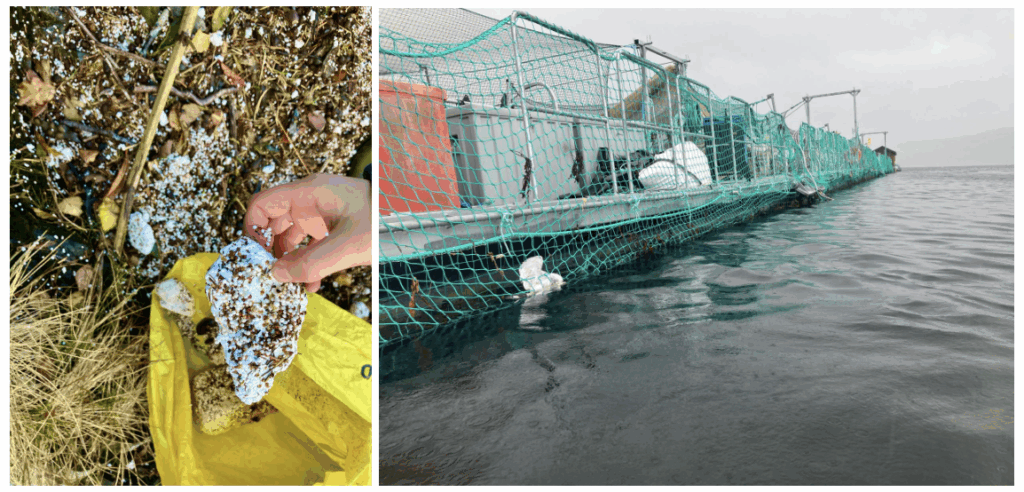
But the industry has received widespread criticism for the environmental damage its open-net fish farms cause to marine life through the use of toxic anti-sea lice chemicals, and the nutrient pollution from uneaten feed and fish faeces.
Residents who live close to Mowi’s salmon farm on the sea inlet Loch Duich, near the village of Plockton in the West Highlands, say they are bombarded by bad smells, noise, and light pollution.
Decomposing fish is left in large bins by the farm, they say, and a loud electricity generator powers air pumps to generate oxygen for the salmon, which are often densely packed on Scottish fish farms.
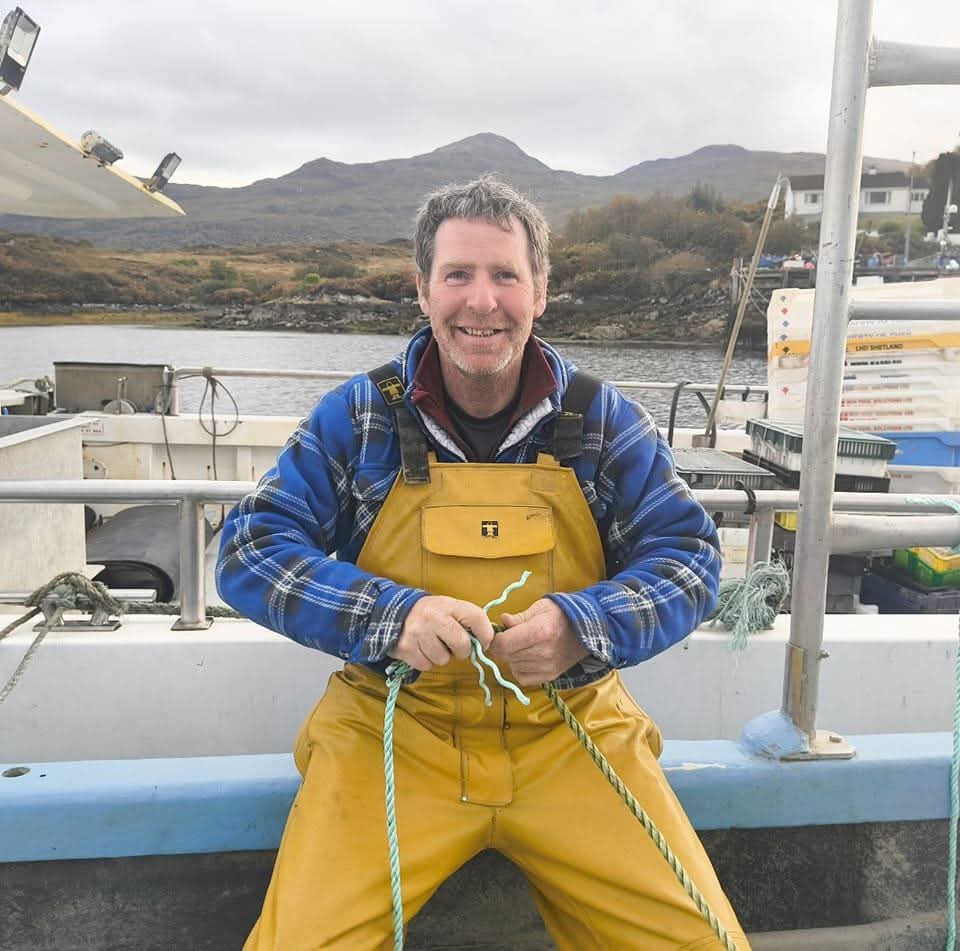
“The water here is like soup,” says Philp, a creel fisherman of 35 years, who works and lives on Loch Duich. “When the tide turns and flows through the fish farms, it washes the effluent and excrement out,” he explains, resulting in nutrient pollution that has been documented to cause harm to marine life on the seabed near salmon farms.
In Loch Duich, Philp says the delousing chemicals used by Mowi to address sea lice infestations kill the crustaceans caught by creel fishers – shellfish such as crabs, lobsters and prawns.
“Velvet crabs are pretty much extinct anywhere near fish farms,” he adds. “There’s a general consensus in the fishing community that they are the first casualty of the delousing treatments.”
Scientific papers confirm that several chemicals used by salmon farms to kill sea lice are lethal to crab larvae even at concentrations lower than used by the farms.
One of these, deltamethrin, is also “extremely toxic” to lobster larvae, found to be deadly within a range of 40 kilometres of salmon farms.
Documents obtained by DeSmog by Freedom of Information request show that in 2023, Mowi’s farm at Loch Duich breached legal limits for the use of deltamethrin, exceeding the authorised limit seven times in one month.
In 2023, the Loch Duich farm was listed as one of the top 19 Scottish salmon farm sites posing the biggest threat to wild salmon populations due to the high risk of infection from farmed salmon infested with sea lice, based on a report by the Scottish Environment Protection Agency (SEPA).
Mowi did not respond to DeSmog’s questions about its use of chemicals. In its 2024 annual report, Mowi says that licensed medicines are used only when “absolutely necessary”.
Mowi’s Loch Duich farm is located within a marine protected area (MPA), which was established in 2014. Dr. James Merryweather, a local resident and retired University of York ecologist, agrees with Philp that it is “quite likely” that Mowi’s farm is polluting the area.
Merryweather told DeSmog that protected species would be “vulnerable to changes in the nutrient status of the water and the amount of sedimentation that occurs”. A review by the University of Highlands and Islands found that fish faeces and uneaten feed under salmon farms can “significantly degrade” communities of seafloor-dwelling animals beneath or near farms.
Some 50 miles northeast, Mowi’s fish farm on Loch Broom near the town of Ullapool is also facing criticism from residents. They are concerned about the risk they believe the farm poses to maerl habitats in Loch Broom, the largest protected habitat for this seaweed, which sits inside the Wester Ross MPA where Mowi’s firm is also located.
Scientists have found that high levels of nitrogen and phosphorus – from salmon farms as well as livestock operations on land – can damage maerl, fragile red seaweed that creates important habitats for a range of marine animals such as scallops, sea urchins and starfishes.
As these seaweeds only grow by one millimetre a year, maerl habitats may take over a thousand years to recover from damage linked to salmon farms operating today, according to testimonies in the 2023 documentary Pink Maerl and Salmon Farms.
Maerl is “the engine of the entire marine ecosystem,” says Sara Nason, coordinator of citizen science survey coalition the Blue Hope Alliance, which has surveyed maerl for the last decade. “There are other reasons for nutrients in [the loch], but salmon farms would be a definite source, and that is the big concern for the protection of maerl,” she adds.
Mowi declined to comment in response to DeSmog’s question about risks to local ecology, including maerl, posed by nutrient pollution.
The coordinator of Highlands-based charity Sea Wilding, Ailsa McLellan, whose home overlooks Loch Broom, has other complaints: “Living beside a salmon farm is like living beside any other industrial factory farm: polluting, noisy, smelly and invasive,” she says.
Janis Piggott, a coordinator at the marine education charity Ullapool Sea Savers, says she is disturbed by pollution from the farm’s flood lights, which are used by the industry to boost salmon growth. “It’s horrendous industrialization of a previously beautiful and unspoiled wilderness – and this is all happening within a marine protected area,” she says. In Mowi’s Biodiversity Framework, the firm champions placing its farms in MPAs, since it provides “the recognition of the coexistence between salmon farming and nature”, while acknowledging the risk that regulations become stricter over time, and limit salmon production.
‘Distorted’
As part of its wider community outreach efforts, Mowi this year launched a series of school visits to salmon farms to “build[s] awareness of sustainable food production”.
The programme began in April 2025 with visits to Loch Broom and Loch Duich, with new outings now being planned in five areas on the west coast of Scotland where the industry says “salmon farming and the blue economy plays a key role in local communities”.
Students from Ullapool High School – located less than three miles from Loch Broom – visited the farm as part of the Rural Skills course, which teaches practical skills for jobs in agriculture, horticulture, and animal care.
On Plockton High School’s visit to Loch Duich, students were taken out on speedboats to farms, tasted samples of salmon, and had the chance to “discuss career opportunities” at Mowi.
According to Piggott, from Ullapool Sea Savers, Mowi has been “ramping up” its presence in schools and sponsorships in the town since it bought Wester Ross Fisheries, which owned the salmon farm, in 2022.
“What could be a massively important and helpful educational experience is, in fact, I fear, being distorted,” she said.
Finlay Pringle, an 18-year old marine conservation campaigner who graduated from Ullapool High School earlier this year, did not go on the tour himself, but thought it unlikely students would have received a balanced view on fish farming, based on his experience engaging with Mowi as an activist. “I doubt they are being taught the information about mortality rates and about plastic degradation and all of these things,” he said.
According to the industry group Salmon Scotland, nearly one in seven farmed salmon on Scottish farms die prematurely due to disease, extreme weather, and stress. The Scottish government reported that from January to October 2025, over 7.3 million salmon died before reaching harvest size, over a quarter of which were on Mowi’s sites.
“As a school, in order to develop the best possible outcomes, we offer a broad spectrum of events and connections to a wide range of local and national employers to our young people so that they are imbued with knowledge, understanding and choice,” Jo Scott-Moncrieff, headteacher of Plockton High School, told DeSmog.
A spokesperson for Ullapool High School told DeSmog: “The blue economy, which includes a wide range of marine-related industries, is a growing sector in the Highlands that offers diverse careers for school leavers, graduates, and beyond.”
Mowi did not respond directly to DeSmog’s request for more information about schoolchildren’s visits to its salmon farms.
Mowi regularly sponsors and donates to community events and infrastructure like local tournaments of popular Highlands sport shinty, as well as to cinemas, and music festivals. Around the world in 2024, Mowi spent over £1.3 million on sponsorships for local initiatives and events.
In an email to DeSmog, Mowi Scotland said it employs 1,600 staff in the Scottish Highlands, Islands and Fife, in “remote and rural” areas. “Often the main employer in the area, our staff are also integral to the community,” spokesperson Helen Ross told DeSmog, “Wherever we can, we strive not only to support the local community but also to improve it, either by donating time, money, equipment or, of course, salmon.”
Ariane Burgess, a Scottish Green Member of Parliament, is concerned that Mowi’s economic power and influence in the area makes it harder for communities to raise objections. “People don’t feel that they can be critical, because that’s who’s paying them, for their jobs and for their shinty clubs and strips,” she said.

‘Feeding the World’
Mowi Scotland says on its website that school trips to farms show the salmon industry’s importance in “feeding a growing global population.”
But Aliou Ba, senior ocean campaign manager for Greenpeace Africa says “industrial salmon farming, as it is practised today, is not a solution to global food security”.
In 2024, 99 percent of Mowi’s salmon was consumed in Europe, North America, and high-income countries in Asia, while just one percent went to the “rest of the world”.
Scottish salmon is exported to 48 countries, with the top three destinations being France, the United States, and China.
Ba explains how small fish are used in salmon feed, instead of directly consumed by people, and that the salmon industry’s reliance on these fish has led to overfishing and food insecurity in places like West Africa.
“The salmon farming industry talks about salmon being a sustainable source of food, a source of protein for the world, and yet, the way that they feed the salmon is not sustainable,” added Scottish Greens MEP Burgess. “We don’t need the salmon [in Scotland]. It’s not a sustainable source of protein.”
Edited by Phoebe Cooke and Hazel Healy
The post ‘They Don’t Give A Damn’: Scotland’s Highland Communities Tire of Charm Offensive by ‘Polluting’ Salmon Giant Mowi appeared first on DeSmog.
This post has been syndicated from DeSmog, where it was published under this address.