
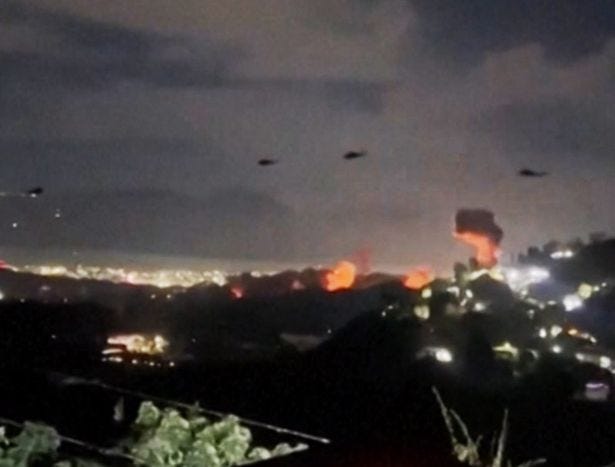
Today, the United States kidnapped the president of Venezuela. An overnight bombing raid knocked out power to Caracas, a city of 3.2 million, before American troops forced took control of the country’s president and first lady. The Trump administration announced that he will be held in the United States to stand trial in US court. The charges against Nicolas Maduro include possession of machine guns, an astounding charge to level against a head of state commanding an honest-to-god national military. Maybe he’ll face additional charges for having tanks and battleships, too.
Just as absurd as charging a foreign president for controlling weapons of war is framing his apprehension as an “arrest.” If British special forces rappelled down into the Rose Garden to physically apprehend President Trump, no American publication would describe it as a mere “arrest”—no matter which UK laws Trump was accused of violating. We would call it an extrajudicial kidnapping and an act of war.
Recognizing this fact doesn’t mean we have to paint Maduro as a saint or Venezuela as a socialist paradise. Millions of Venezuelans have fled the country in recent years. It is simultaneously true that the Bolivarian Revolution saw unprecedented transfers of oil wealth to the country’s working class and that the Bolivarian state has become increasingly repressive in recent years amidst falling oil prices and punishing US sanctions. It is simultaneously true that thousands of everyday Venezuelans have taken the streets against the country’s imploding economy and stage-managed elections and that the United States is propping up the most reactionary elements within the Venezuelan opposition in order to fulfill its decades-long goal of, to use another imperial euphemism, “regime change.”
Nigel Farage, the reactionary leader of the UK’s Reform Party, offered a refreshingly honest reaction to the kidnapping:
“The American actions in Venezuela overnight are unorthodox and contrary to international law – but if they make China and Russia think twice, it may be a good thing.”
Farage has said the quiet part out loud, for this seems to be the dominant posture of America’s Western allies. Sure, kidnapping a foreign head of state is against international law. And sure, it’s a bit “unorthodox.” But if it’s ultimately a “good thing,” who are we to complain?
It’s the same fairweather interpretation of international law that allowed the world’s leading liberal democracies to fund years of mass murder in Gaza. Genocide might be a technical of international law, but insofar as it’s a “good thing”—that is, ultimately beneficial to imperial interests—why let something as trivial as international law and norms get in the way?
Liberals love to dream that the “grown-up” leaders in Canada or Western Europe will eventually restrain Trump’s immature impulses. They fundamentally misunderstand the stakes and interests involved. The wealthiest, post-imperial countries in the world share a fundamental interest in the maintenance of an Israeli garrison state in the Middle East. They share a fundamental interest in limiting Chinese and Russian influence in the Americas. They won’t stop Trump murderous new version of the imperial Monroe Doctrine because they would have nothing to gain by doing so.
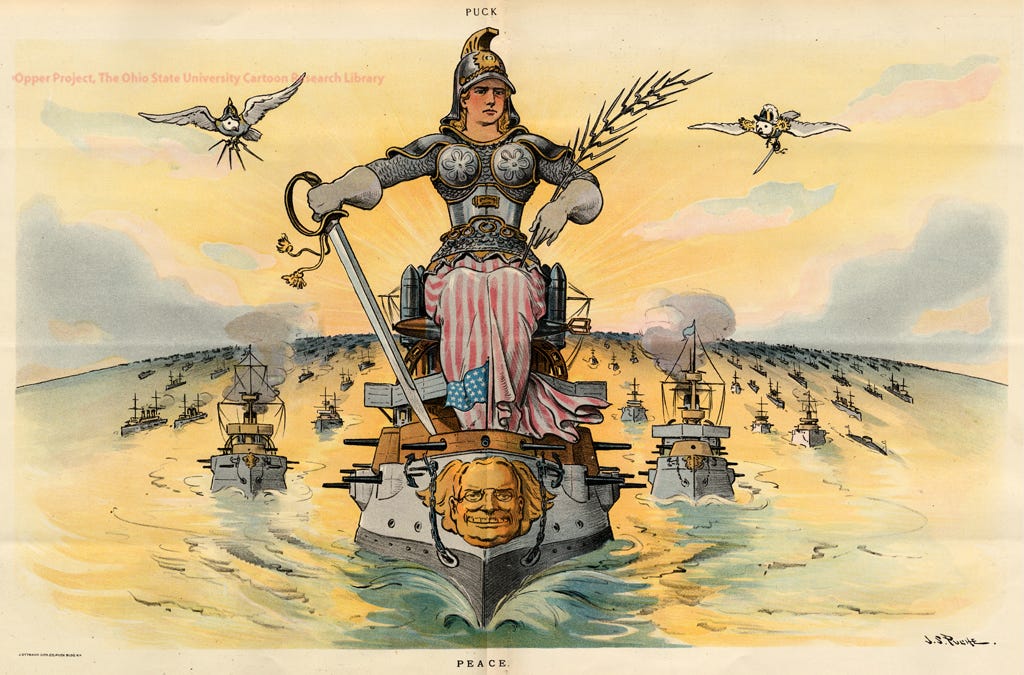
Resistance to American imperialism will have to come from the Americas itself—from autonomous social movements within the United States and across the continent.
This post has been syndicated from In Struggle, where it was published under this address.