
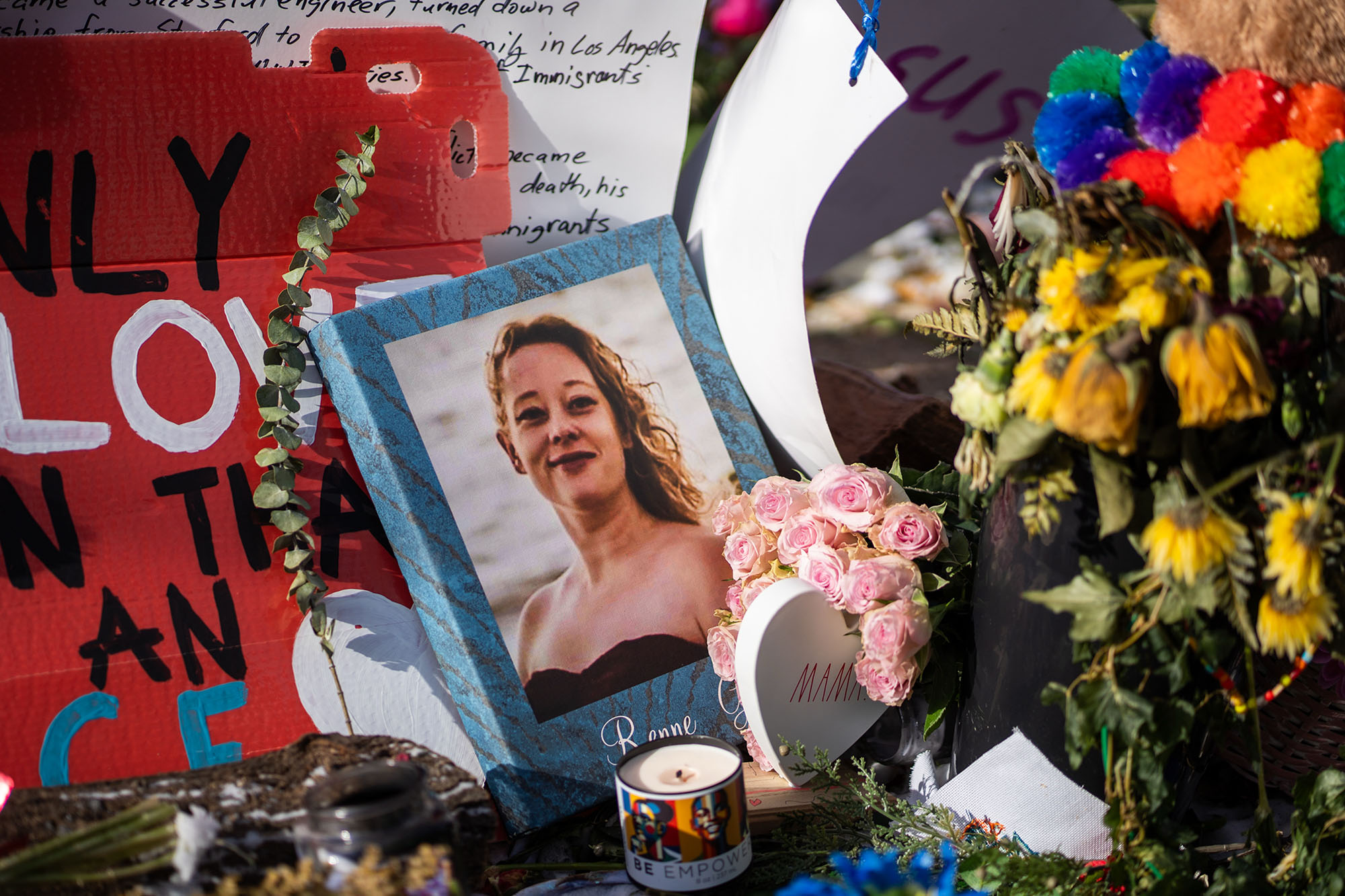
George Floyd’s aunt, Angela Harrison, sits in her car down the block from Renée Good’s memorial, warming her hands against the heater. Outside, two women walk toward the memorial in face masks and ski goggles, the snow squeaking under their boots, to join the dozens in puffy jackets and face masks who are already there.
It’s a bright Friday morning, negative-13 degrees outside. That afternoon, tens of thousands of protesters will gather downtown to protest ICE. A day later, immigration officials will kill Alex Pretti.
But in this moment, Harrison is feeling a weighty gratitude as she watches the crowd.
“They’re still coming out here,” she marvels. “God bless them.”
A man with a cane takes in the collection of flowers, signs, paintings, and flags. Some children have left their teddy bears. A woman kneels in prayer. A few gather around the bonfire that regulars have kept burning every day since Good’s death.
“We didn’t know what to do, but one of the things that kept us together was a unity,” says Angela Harrison, George Floyd’s aunt. “I still see the unity.”
Harrison has come here several times over the past couple weeks, sometimes after she visits her nephew’s memorial a few blocks away. On the evening of Pretti’s death, she will attend a candlelight vigil for him at George Floyd Square. She knows all too well what Good’s and Pretti’s families are going through: the pain, the grief, the media frenzy, the scrutiny and character attacks. “There’s no time to really grieve, there’s no time to do anything, because you’re just in survival mode,” she says.
Harrison is a woman of faith, and after her nephew was murdered, when she was in a dark, lost place, she says she heard from God. She came to believe that when Floyd was pinned down, each time he said I can’t breathe was an act of hope that someone would help him. If her nephew had the courage to ask for help—not once, not twice, but 27 times—she could have the courage to raise her own voice. In the years since then, she has made a point of showing up for grieving families of those killed by authorities. She hasn’t reached out to the families of Good or Pretti—it doesn’t feel like the right time—but it feels important, she says, to simply pay her respects, as so many did for her in 2020.
“We didn’t know what to do, but one of the things that kept us together was a unity,” she says. “I still see the unity.”
We get out of the car and Harrison goes to the trunk to get her purse. “In case I get stopped by ICE, I’ll have my ID,” she says, with a wry laugh. “I know, it’s terrible you have to say this, but you do.”
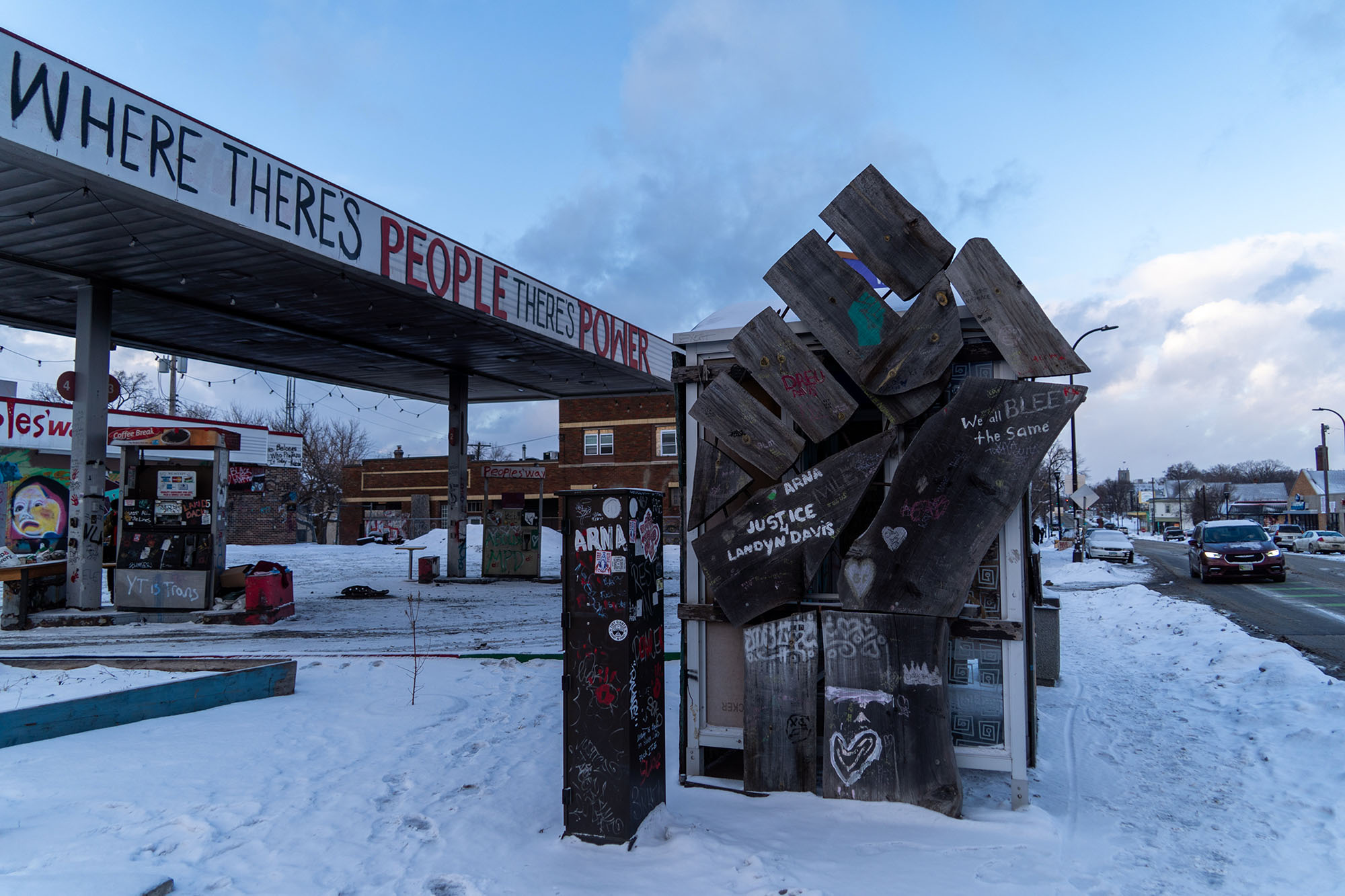
I grew up in Minneapolis, 10 minutes away from where Good was killed, and returned last week to a hometown that felt under siege. Even if you’re not looking for it, ICE’s presence is impossible to ignore. Residents carry whistles on lanyards or strapped to backpacks. They patrol sidewalks in yellow vests. Restaurants in immigrant-heavy neighborhoods have seen business plummet; many keep their doors locked during open hours. The city has cleaved along a new line of haves and have nots: those who can attend schools and hospitals, and those who are forced to attend virtually. Everyone seems to know someone who hasn’t left their home in weeks.
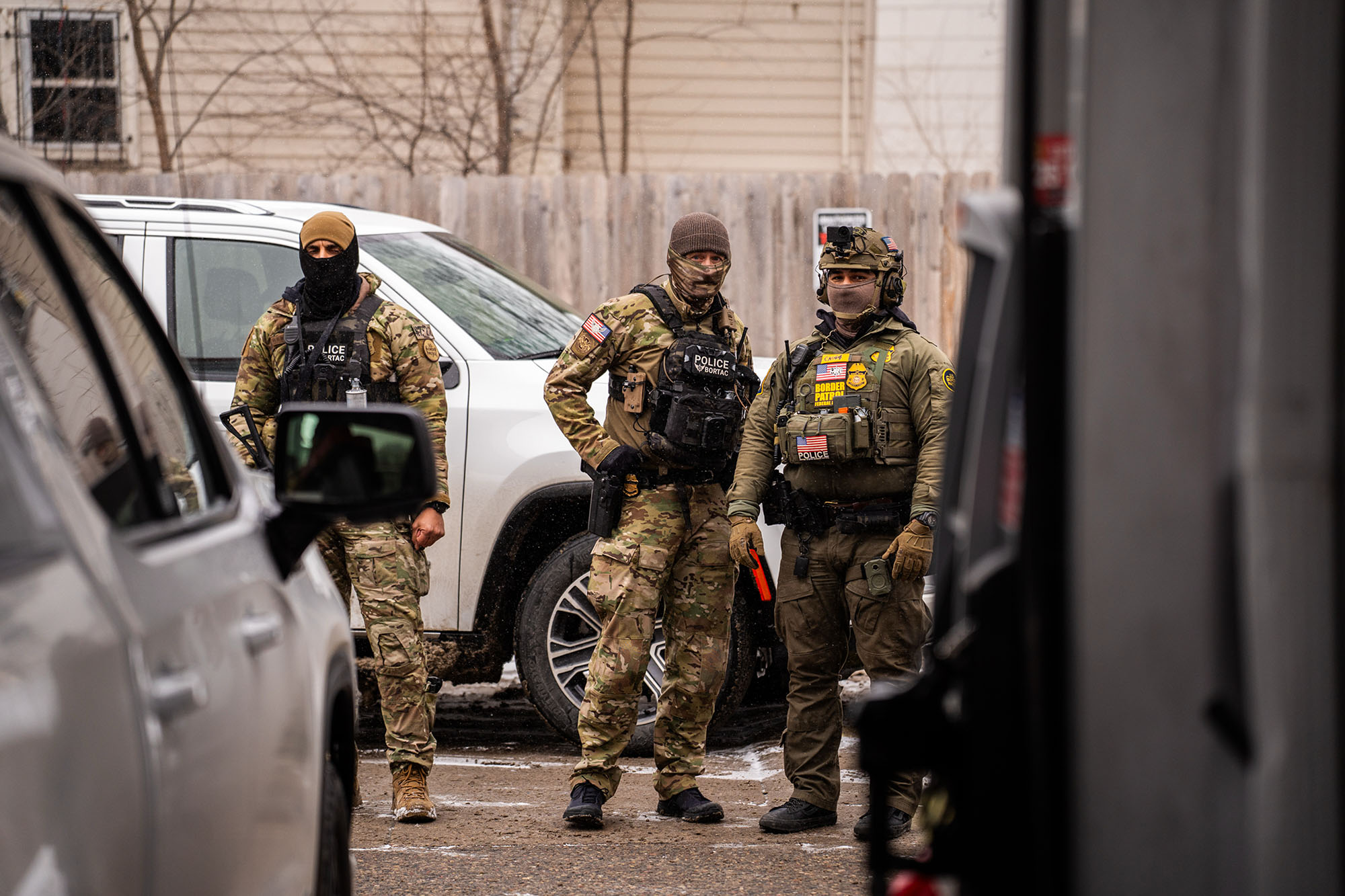
There’s a pervasive sense that ICE is just around the corner, lurking in SUVs with out-of-state plates. At first, it seemed to me like this vigilance bordered on paranoia—until I drove past an idling car on a quiet residential street, and there they were, four agents sitting inside wearing camo face masks and tactical gear.
The patrols, the chats, and the mutual aid feel familiar—the reignition of a decentralized, citywide rapid response apparatus that was last activated in the aftermath of Floyd’s murder.
In ICE patrol chats on Signal, residents sound the alarm when agents are nearby, leading observers to descend on the scene, blowing their whistles and honking their horns and filming on their phones. The hyperlocal chats have proliferated, dividing and multiplying when they reach the 1,000-person limit. Some include requests from people or places asking for help: an apartment complex with heavy ICE presence that needs observers, a restaurant asking for patrol during a shift change.
The patrols, the chats, and the mutual aid feel familiar—the reignition of a decentralized, citywide rapid response apparatus that was last activated in the aftermath of Floyd’s murder. Soren Stevenson, a city council member who took office earlier this month, remembers doing neighborhood watch in 2020, sitting on his porch across the street from a Black church through the night to make sure it didn’t burn down.nDuring a peaceful protest after Floyd’s death, police shot Sorenson with a rubber bullet, causing him to lose his eye.
“After the murder of Renée Good, we’ve gone into overdrive,” he says. “We’re connected to our neighbors. A lot of people are like, ‘Hey, I haven’t seen you since the uprising. But here we are. We’re back.’”
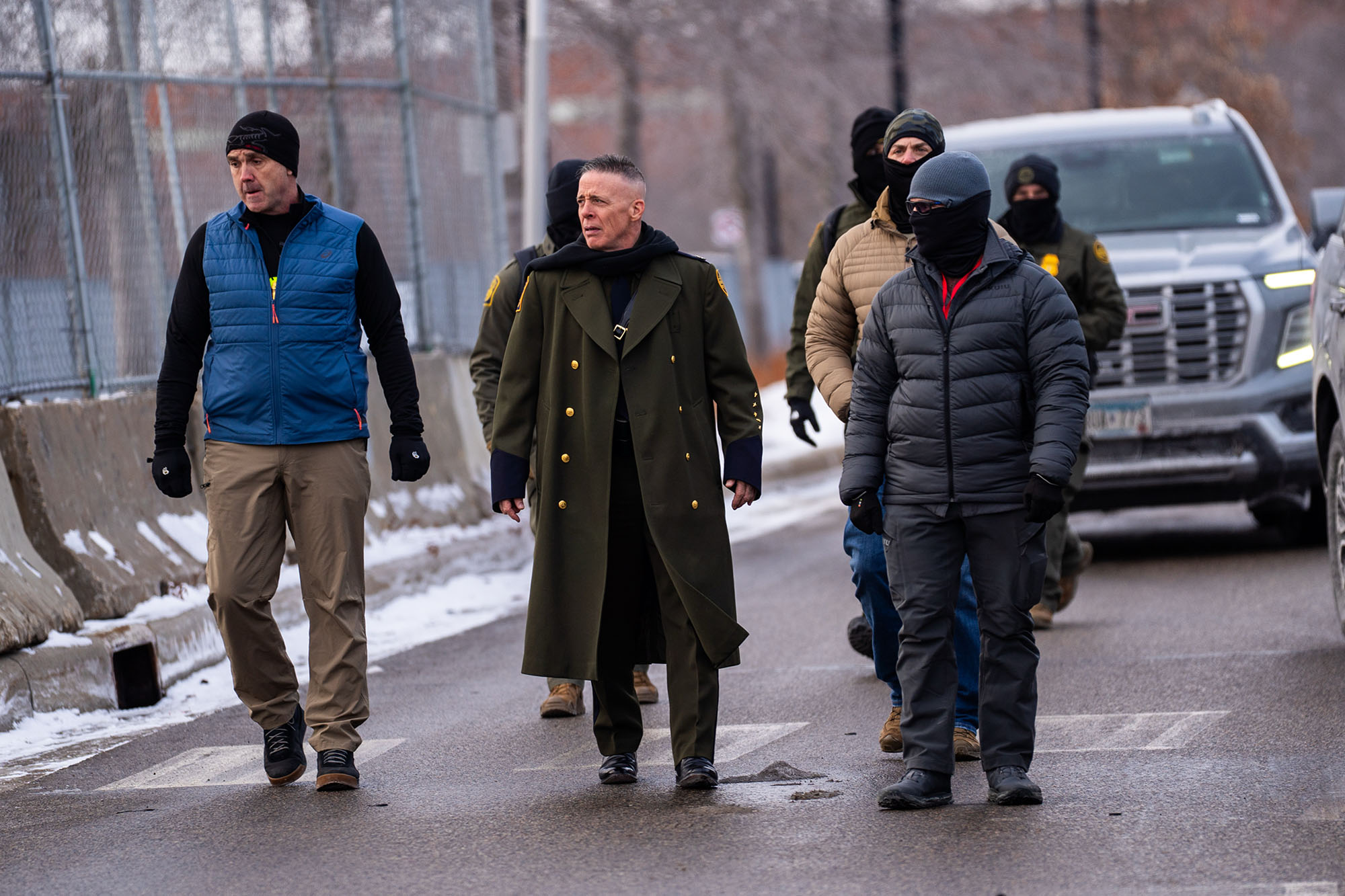
When we speak—six days before news breaks that Trump is pulling some federal agents out of the state, and that senior Border Patrol official Greg Bovino has been dismissed from his post—Sorenson predicts that the city’s social fabric will ultimately cause its residents to prevail.
ICE’s presence “will end at some point, and we’re going to still be united,” he says. “We’re going to still be looking out for each other when they’re gone.”
One morning, I drive with photojournalist Madison Swart, who’s signed into a few ICE patrol Signal chats. There are so many messages coming in that it looks like her phone is glitching.
She’s also called into one of the many continually running Signal calls—also divided by neighborhood—where a dispatcher runs license plate checks of potential ICE vehicles and tell observers where they’re most needed. The calls have the feel of an amateur police radio. Volunteers use quirky aliases and the military alphabet but sometimes don’t remember—a caller might say something along the lines of, “This is Cheese Curd, and I’d like a plate check on Texas plate One Three Four Six Charlie, uh, Robert.”
We’re directly behind a sedan with a man yelling, “FUCKING NAZI!” out the window to the Jeep in front of him. The immigration agent in the driver’s seat leans out the window, looks back, and waves.
Word is that there’s a convoy of ICE vehicles, including Bovino, nearby. It is the middle of the workday, and as we drive, we pass dozens of observers on patrol. Some volunteers direct traffic in the direction of the supposed convoy, blowing their whistles. Others run after the convoy themselves. As we get closer, the sound from the whistles and the honking is cacophonous. Soon enough, we’re part of the line of cars, which has evolved into a strange mix of white Jeep Wagoneers with ICE agents in camo masks, observers leaning on their horns and filming with their phones, and journalists toting big cameras. Traffic rules seem to fly out the window—everyone is blazing through red lights, like a cross between an angry funeral procession and a car chase. A woman sprints out of her front door in sweatpants, blowing her whistle. We’re directly behind a sedan with a man yelling, “FUCKING NAZI!” out the window to the Jeep in front of him. The immigration agent in the driver’s seat leans out the window, looks back, and waves.
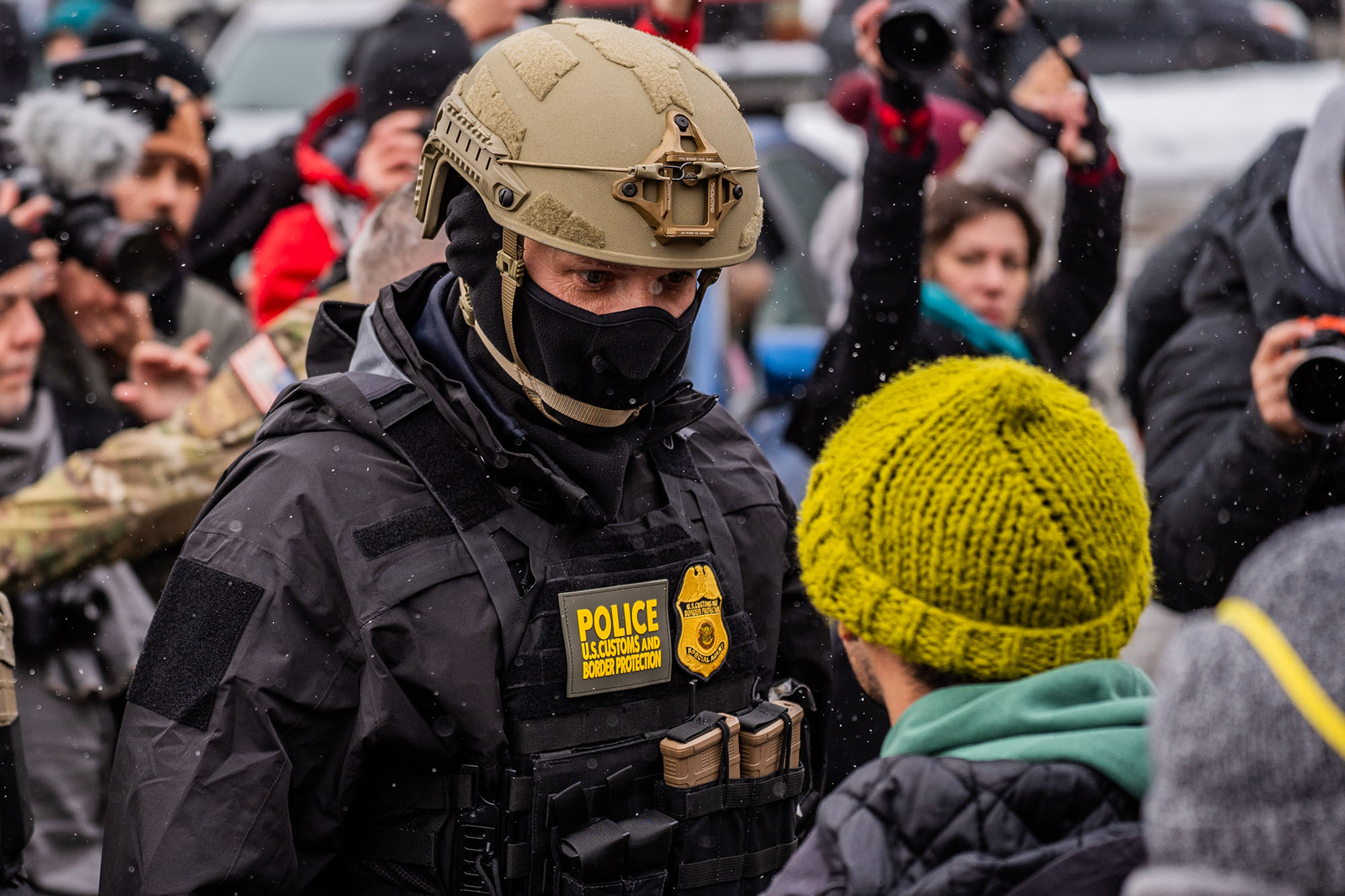
The convoy is driving big loops around the south side of the city. The frenetic drive doubles as a surreal tour down memory lane—we zoom by the diamonds where I played softball and the path where I used to run. We soon arrive at Minnehaha Parkway, the road I took to high school each day, where the convoy does a lap around a parklet that’s just a hundred yards long. The agents, followed by a perhaps 20 cars, drive around the parklet a second time, and then a third. The honking and the whistling are nonstop. The press and the observers have their windows down and are filming the agents, and the agents appear to be taking photos of the observers and the press with their own cameras. Around and around we go. The agents look like they’re having a blast, leaning out their windows now, singing to music we can’t make out in the din.
Inside the entrance of Dios Habla Hoy Church, in South Minneapolis, the wood box on the wall for tithes and offerings is barely visible, surrounded by pallets of canned tuna, heaps of potatoes, and cardboard boxes of fruits and vegetables. The wall of the light-filled sanctuary is lined with boxes of diapers. Dozens of volunteers of all ages buzz in every direction, sorting and stacking donated food and assembling boxes of groceries.
Pastor Sergio Amezcua, who presides over the 500-person church, wasn’t anticipating this. When ICE came to town in early December, he assumed that they’d be going after the bad guys.
“Coming from a conservative government, Christian government,” Amezcua says, “I just think they’re reading their Bible backwards.”
Now, he’s come to see ICE as the bad guys. “The real story is that ICE is acting like narco cartels back in Mexico, but doing worse things than narco cartels—arresting five-year-olds, messing around with pregnant women, killing females. Not even narco cartels do that stuff,” says Amezcua, who immigrated from the Mexican state of Sinaloa. “Coming from a conservative government, Christian government—I just think they’re reading their Bible backwards.”
The grocery delivery operation was also something of a surprise. When his assistant told him in December that lots of community members were scared to leave their homes, Amezcua suggested that the church put up a link on social media where those in need of deliveries could register. He was expecting 10 or 20 families to sign up. By the end of the day, 2,000 had put their names on the list.
Over the six weeks to follow, close to 4,000 volunteers have registered to help. So far, they’ve delivered grocery boxes to 17,000 families.
One volunteer, a 28-year-old strategy consultant currently between jobs, found out about the operation on a neighborhood Facebook group in December and has been coming ever since. She walks me through the logistics: The church receives food from community donations and food shelves, many of which are seeing low attendance right now. Grocery boxes are packed in an assembly line around a U-shaped collection of tables in the church entryway.
“I feel like it looks very dire and hopeless from the outside, and I feel that sometimes too,” she says. “But then there’s a weird juxtaposition—like, it’s also so hopeful. We’re literally turning volunteers away saying, ‘Please come back another time.’” Indeed, during the 10 minutes we speak, a gray-haired man walks in, asking how he can sign up to volunteer. Another comes in moments later, asking where he can drop off a check.
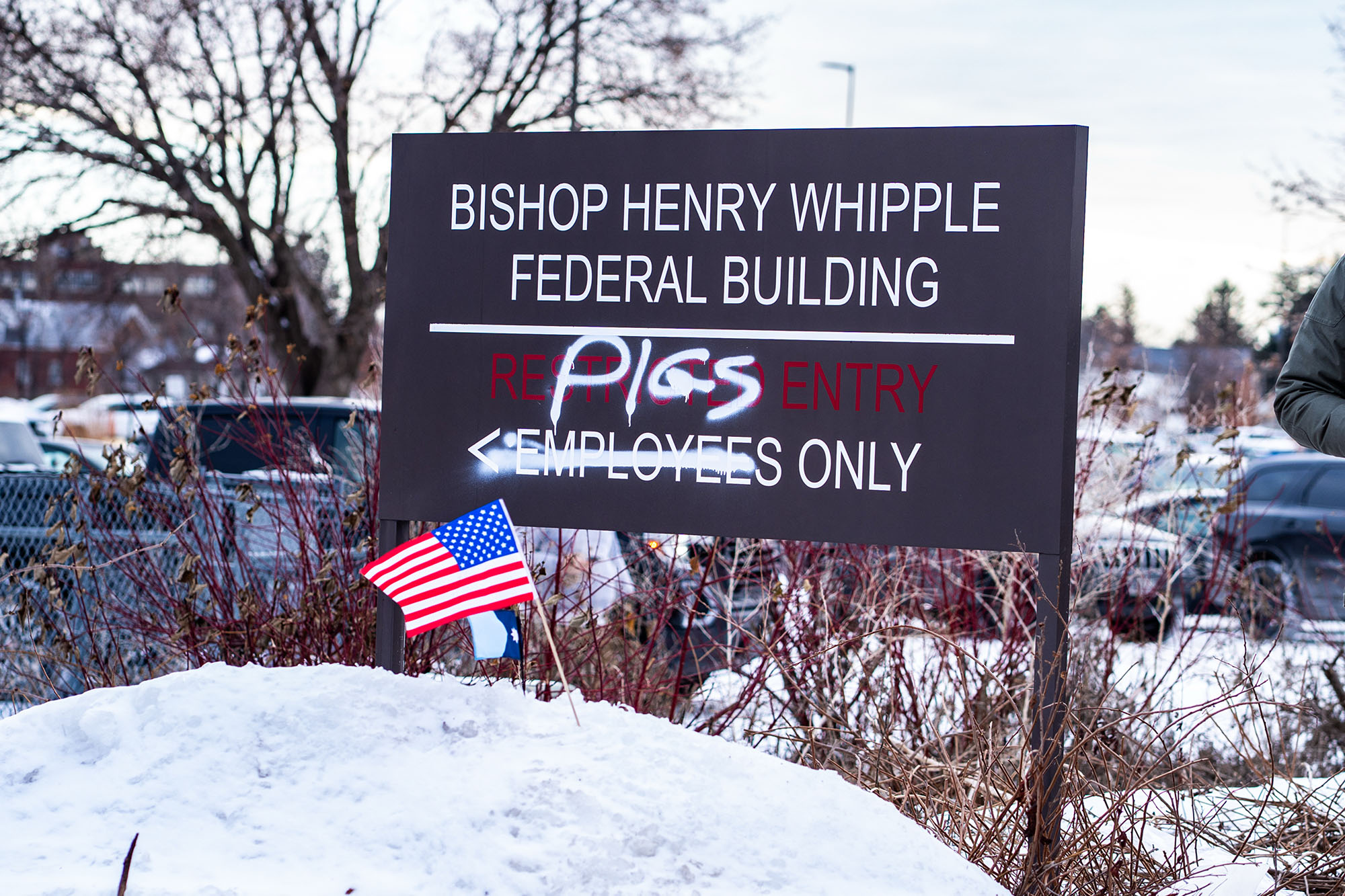
A routine of sorts has set in at the federal Whipple Building, the brutalist structure where ICE operations are based, and where, on the sidewalk behind a barricade, there’s been a standing protest for weeks. Every time a vehicle pulls into the entrance to the building, the crowd—perhaps 50 people last Tuesday afternoon—yells and whistles and jeers. On the corner, there’s a pile of gloves and coats for protesters who arrived without enough layers. An elderly woman drives up to drop off cookies.
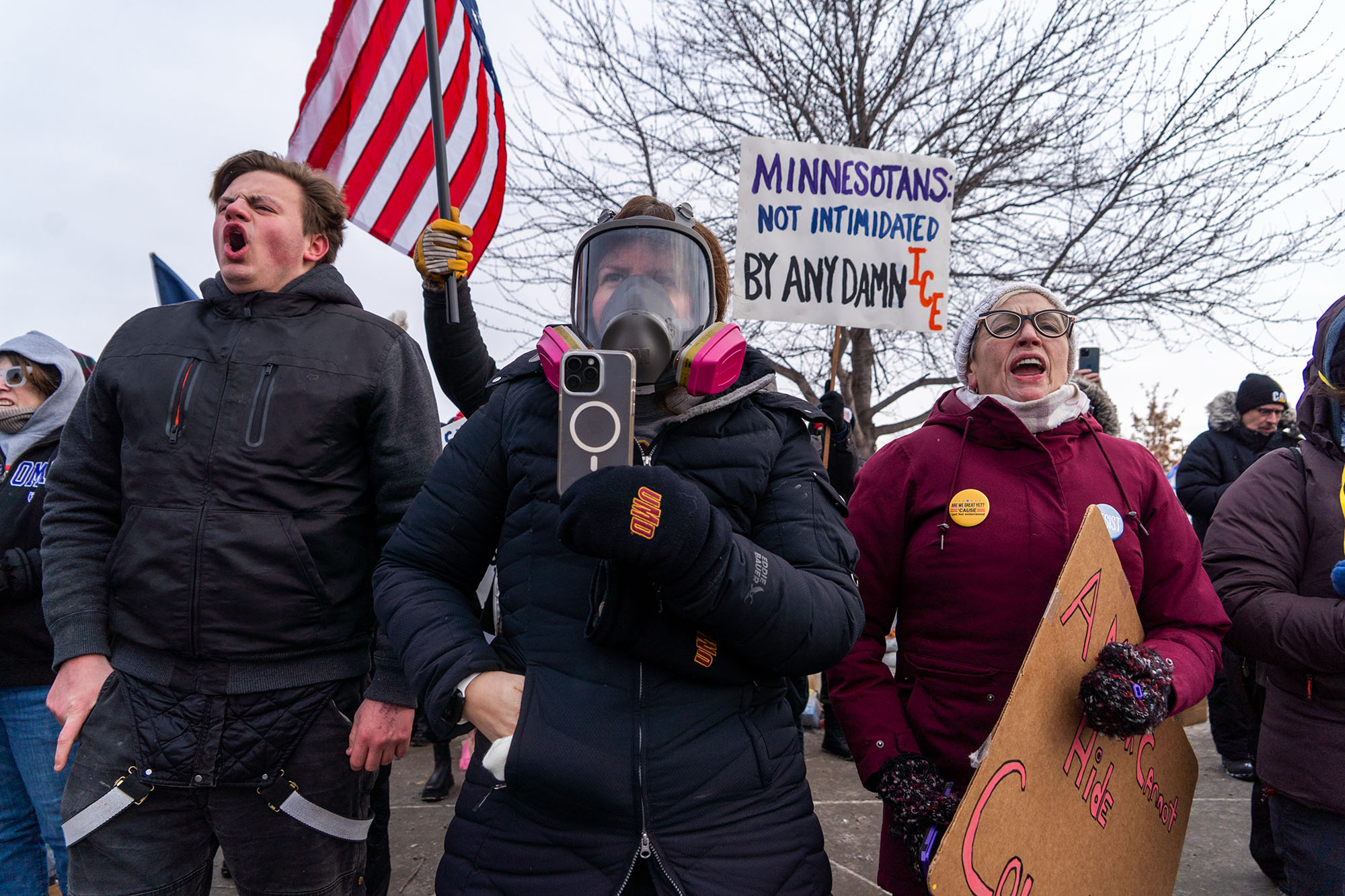
The protesters have their own reasons for showing up in the middle of a weekday, but many of them say they couldn’t stand to be inside doom scrolling or pretending to work.
“I was sitting at home, and it was driving me crazy, and I was like, ‘What can I do?’” says Shontay Evans. “So I packed up a bag of snacks down there on the corner and came down here passing out snacks and water, and I got two pizzas on the way.”
Evans, who wears a Minnesota Wild sweatshirt and blue snow pants, is the owner of the state’s only Black-owned plant nursery. She talks a mile a minute. “Minnesota is definitely about solidarity and sticking together and standing for injustice, just like we did for George Floyd,” she says. “Don’t forget, if you’ve been silent, that’s complicit, so you’re agreeing with what’s going on, so we need everybody to stand up. You need a hand warmer?”
Jessica stands back from the crowd. She has a gentle smile, introducing herself as the daughter of Mexican immigrants who was born in Minnesota and raised in Texas. She says she doesn’t feel comfortable screaming and blocking roadways and things like that, but she wants to be here to represent the many people who don’t feel safe to leave their homes.
“When they say, ‘Why would you be out here?’ how the fuck could I not be out here?” Army veteran Ian Austin says. “My nation is under attack.”
After we chat for a few minutes, I ask Jessica if there’s anything I’m not asking that she wants to talk about. “While I operate from a place of love and compassion, for the most part, I think we’re at a tipping point,” she says. She smiles that gentle smile. “I’m licensed to carry in Texas, and I’m not afraid to exercise that right to defend my family as well as those who cannot defend themselves.”
Later, I meet Ian Austin, a 35-year-old Army veteran who lives in Philadelphia. He says he’s done six combat deployments and has severe PTSD, and he speaks with the urgency and impatience of someone who’s about to break into frustrated tears.
“When they say, ‘Why would you be out here?’ How the fuck could I not be out here?” he says. “My nation is under attack.” He goes on, “We’re turning into something that I can’t even begin to respect, and something that I literally went to war—or they told me I went to war—to fight against.”
He arrived on a Thursday night. The next day, outside the Whipple building, federal agents tackled and arrested a dancing protester dressed as a fox. Video captured by CNN shows that when Austin walked toward the action, he was tackled and arrested, too.
Austin says he and other arrested protesters were shackled and held in a holding cell in Whipple. He estimates he was there for seven or eight hours before being released without charges. He did okay in detention—“thankfully I’m flexible and I meditate,” he says—but he weeps when he talks about being released without his phone. Austin’s a poet, and “if I don’t get my phone back from the government, I’ve lost my photos and my videos from my entire life,” he says. “That’s everything. That’s memories, that’s life, that’s my purpose.”
A couple of days later, news breaks that federal officials have arrested three demonstrators who interrupted a church service in St. Paul because of the pastor’s work as an ICE official. Announcing the arrests on X, Attorney General Pam Bondi wrote, “Listen loud and clear: WE DO NOT TOLERATE ATTACKS ON PLACES OF WORSHIP.” The protesters, who were later released, face federal charges for conspiracy to deprive rights.
After I see the news, I call Austin. He also had been a demonstrator at the church. When I reach him, he’s at a protest outside the courthouse, where there’s a hearing for Nekima Levy Armstrong, one of the arrested protesters. I ask if he’s worried that he’ll be next. “I’m slightly worried,” he says. He’s Sharpied the number of a local lawyer onto his body in case he’s taken in. “That’s why I was here today, because I was like, ‘You’re going to take them? Take me too,’” he says. “‘Take me too.’”
This post has been syndicated from Mother Jones, where it was published under this address.