
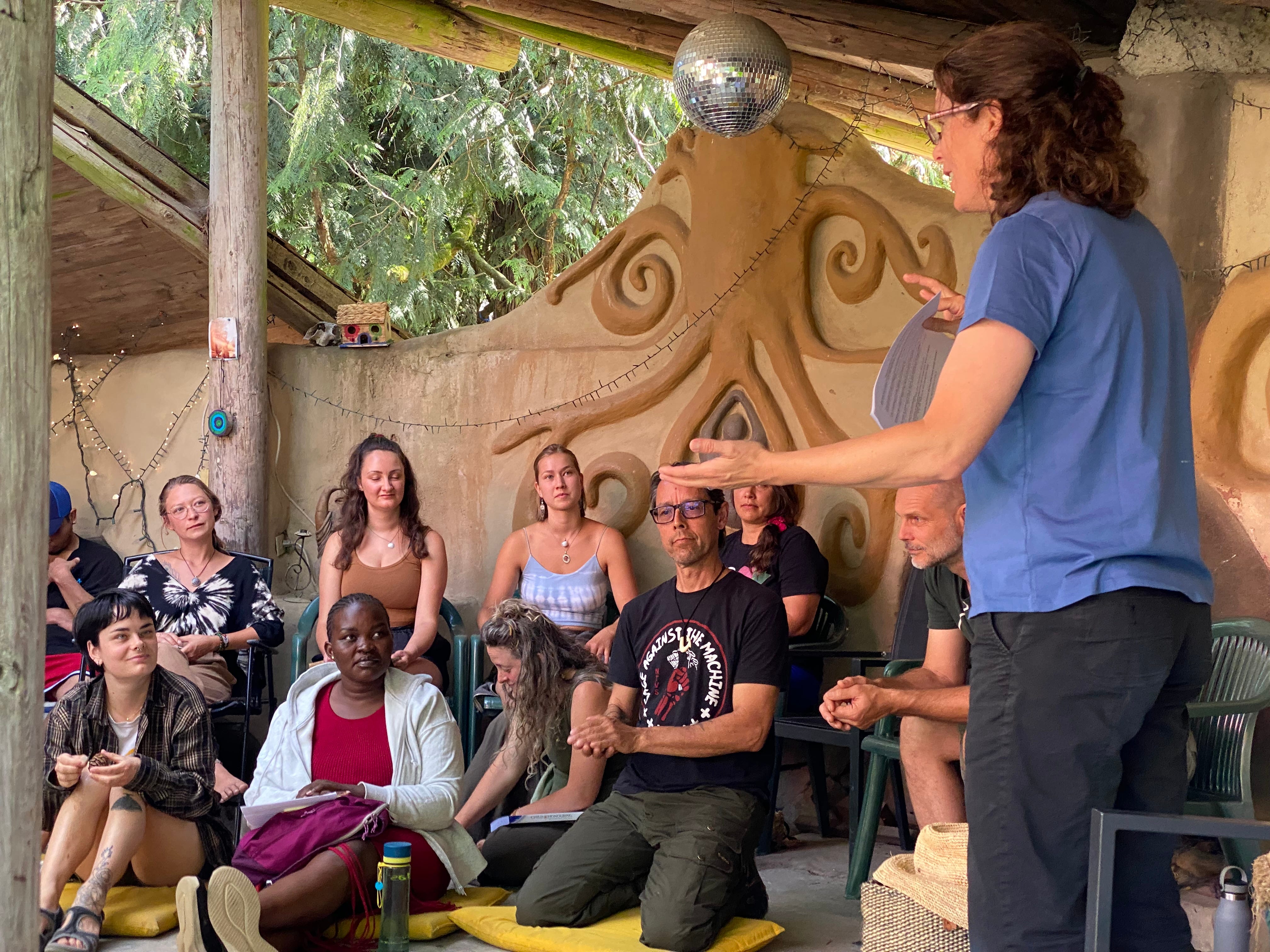
As we head into the second year of the Trump administration, resistance is strong, growing, and effective. So effective that Trump and the MAGA movement seem more and more like a cornered animal, panicked, lashing out, and more dangerous than ever. So we, more than ever, need to organize. And organizing requires meetings.
Whether they are in person or online, meetings are the way we decide what to do, who’s going to do it, make sure it’s gets done, and evaluate the results. Holding effective meetings is a key skill for survival in these challenging times.
I’ve been facilitating meetings of various sorts for more than fifty years, the vast majority of them voluntary groups without a formal hierarchy. During that time, I’ve seen a lot of meetings bog down, erupt into conflict, or get nowhere. When that happens, it can often derail our organizing and sometimes destroy a group altogether.
Here are three quick tips you can use, either when you’re facilitating a meeting or simply being an active participant, to unstick a stuck meeting.
1) Reflect and Reframe
Is your group about to come to blows because half of them want to disrupt the sleep of ICE agents at their hotel with whistles, horns and banging pots and pans throughout the night, the other half are intent on doing it with choral singing? Are they starting to badmouth each other?
Conflict often gets framed as good versus evil, so one of the most effective reframings we can offer is to acknowledge that many of our disagreements are actually between different forms of good, different priorities or simply different preferences. Neither the singers nor the shouters are bad. The singers aren’t wimps and the shouters aren’t thugs, but they can easily get cast as such in the heat of an argument.
That’s when a good facilitator or even a helpful participant might call for a halt and reframe the issue. “Hey, can we just pause for a moment and appreciate that we’ve created a space that can hold such a wide range of approaches? Isn’t it great that we have so much diversity in this group, and two approaches to this action that are both potentially effective? Aren’t we a living example of the diversity we’re fighting for, when we show that we can work together?
2) Untangle the Various Threads of the Conflict
Reflect back what you’re hearing from the group, and separate out the various strands of the proposal. Then get agreement on the ones the group holds in common,
“I’m hearing that we all agree that we want to do an action at the ice hotel. Is that right?”
“We all agree that we want the action to take place in the middle of the night, and disrupt the ICE agents’ sleep. Did I get that correctly?”
“Can we affirm then we have agreement on those core features?”
Then identify the disagreement, and ask for creative solutions.
“Now where we disagree is on the tone of the action. Who has ideas on how we can incorporate both tones, or resolve this question?”
Once a group acknowledges some core agreements, each side can feel less invested in the power struggle of winning and more open to finding a both-and or compromise solution. Maybe we could have an hour of choral singing, followed by an hour of shouts and whistles? Maybe we could carry the action on for more than one night with alternating tones? Maybe the coral singers could incorporate some loud drums and trumpets? There are many creative solutions that will be easier to find when the group starts from a ground of basic agreement.
3) Back o’ the Barn
if the group is truly truly stuck and deeply polarized, if neither of the approaches above works, often it’s because a small number of people on each side are deeply invested and loud about it.In order to let the group move forward, I will often ask “Who feels most strongly invested in the choral singing? Who in the loud noise approach?” I’ll pick one or two in equal numbers from each side and send them outside of the meeting to see if they can come to a solution. If necessary, I might ask a neutral mediator to go with them.
If the most extreme advocates of each position can work out a compromise, others who don’t feel as strongly invested will go along. And it will be easier for the opposite poles to compromise when they don’t have to save face in front of a larger group.
There’s a lot more, of course, that goes into running a successful meeting or even being a helpful participant. If you’re interested in learning more deeply how to make your meetings more effective, Earth Activist Training has a course taught by me and co-director Charles Williams, starting on Wednesday, February 11th: The FiveFold Path: The Craft of Skillful Facilitation. It’s online, six Wednesdays, from 6:00 to 8:00 PM Pacific Time, but recorded if you want to watch later. We’ll be looking at the five-fold path the productive meetings: right people, right container, right process, right facilitation, right agenda, and more.
In my many decades of organizing I’ve seen many groups falter and die because they could not resolve conflicts or make decisions effectively, but I’ve seen others grow and flourish. In this moment when so much hangs in the balance, we desperately need our organizing to be effective and empowering as we strive for a world of greater caring, compassion, and justice.
I keep my posts free for all to read, but if you subscribe, you’ll get them in your inbox. And if you can afford a paid subscription, you’ll help support my work and writing, plus get access to some special benefits, like a monthly live Community Conversation next one is on Sunday, March 8, at 10 AM Pacific Time.
Like this post, want to show some love but not to commit to yet one more monthly sub? Feel free to Buy Me a Coffee and help me keep open time to write!
This post has been syndicated from Starhawk’s Substack, where it was published under this address.