
A note on who I am: I’m an investigative journalist who’s spent a decade reporting on the collision of technology and democracy including exposing the Facebook/Cambridge Analytica scandal for the Guardian and the New York Times. Two years ago, I called the alliance of Trump, Silicon Valley and a global axis of autocracy: a tech bro oligarchy, aka the Broligarchy. Please help me continue to expose it.
TW: Sexual assault and rape
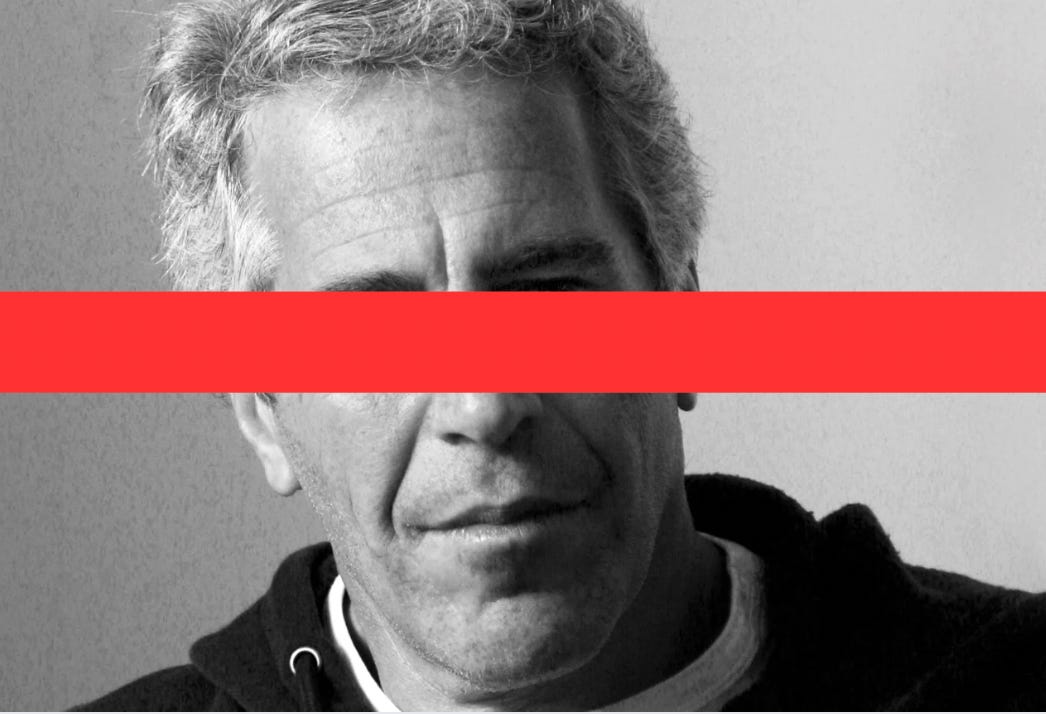
This is not the piece on Jeffrey Epstein that I was going to write. I’ve struggled with that article all week. On Monday, I plunged into the three million-plus files which the Department of Justice dumped onto the internet a week ago and immediately surfaced a dozen or so gobsmacking emails that hadn’t then been made public. (Many of them now have, but not all.)
By Tuesday, I had a scoopy piece almost ready to publish…but I’ve been unable to finish it. I have, to be perfectly honest, been overwhelmed. Some of the key stories it reveals are areas that have been my specialist interest for years. The Kremlin. Silicon Valley. MAGA and the European far right. Israeli intelligence. And there, slap bang in the middle of it is a man who I’d never wanted to pay any attention to, Jeffrey Epstein. Not only are they all connected. Epstein connects them.
So many of the names in the files are subjects of long-standing interest: Peter Thiel, Steve Bannon, Elon Musk, Oleg Deripaska, even Peter Mandelson. It’s a gold mine of new evidence and connections and revelation after revelation. What I also realised diving deep into the mid 2000s to 2010s, is how I repeatedly almost crossed paths with Epstein.
I was drawn to some of the same milieus: not the island, obviously, but Moscow and especially Silicon Valley. I had the same curiosity about the disruptive new technologies that were emerging: cryptocurrencies and web 2.0. I even went to the same tech conferences.
I am still going to write that piece, it’s sitting half-finished in my drafts, but it’s been weighing on me in ways that are both obvious and submerged. One of the most popular insults used against me by both right-wing commentators and people who should know better was to call me a “conspiracy theorist”. Well, guess what. This more than anything, I’ve ever written sounds like a conspiracy theory. It’s just a criminal rather than a theoretical one.
There’s been something else that’s been holding me back. It’s the geopolitics that’s fascinated me, the files are like a door you didn’t even know existed suddenly swinging open. But there’s another subject in there that’s manifestly Epstein’s core interest, a subject I’ve covered, that underlies so much of my reporting, that I’ve both tried to expose and found myself hard up against: power.
And yesterday, I realised the first piece on Epstein I wrote has to tackle what I believe is the overwhelming revelation of the files. It speaks, I think, to our inability to even see the edges of this story, let alone process it. It’s not just the rampant misogyny that oozes from the pages of these documents. Women as chattel. Women as objects. Women as objects of both hate and desire.
It’s darker than that. Because it’s something that we do not want to see, that we cannot comprehend, that’s as sickening as it’s pervasive.
What Epstein shows us is that we live in a paedophiliac culture.
It’s not just Epstein. That’s what these files reveal. Epstein is communicating with hundreds of men in these millions of pages. Men from every country and power structure: US finance, petrodollar royalty, Russian oligarchy, Hollywood, Palo Alto, Washington, Westminster. We know that more than 1,000 women and girls were trafficked and there are hundreds of Epstein survivors. As well as those who tragically didn’t survive, such as Virginia Guiffre. We must keep them front and centre, always.
Epstein was a criminal. Whether any of the men named in these files are too is not something we can know: no charges or prosecutions have been brought. But it’s not just Epstein. That’s what we now have to realise. Obsessive, pervasive sexual interest in teenage girls – and to some degree, boys – is threaded insistently through our culture.
We just choose to ignore it. We redact it. It’s a darkness that we cover with more darkness.
Are we going to reckon with that? Can we?
What percentage of legal porn features “teens” or “barely legal” content? I asked ChatGPT moments ago. I got no answer. “This content may violate our usage policies,” it said. There’s a prudish veil of respectability that Silicon Valley maintains even while most tech platforms derive a huge percentage of their profits from sexual interest in children.
Porn represents 1/4 of all internet searches and according to Pornhub, “teen” is the most searched-for term. Meanwhile, OnlyFans exploits a market for sexual content that from teenagers posting adult content at one minute past midnight on their 18th birthdays.
We all reacted with disgust to Elon Musk’s Grok non-consensually undressing women and girls, but at least we knew about it. Musk had made it visible rather than as it is on most platforms politely hiding it just out of view.
Not all men are paedophiles, obviously. Very few are. But our culture eroticises teenagers for money. Our technology finds, exploits, amplifies what maybe passing impulses. It monetises them. In the dark corners of the internet, the recommender systems do their work. Instagram, the “safe” social media platform? Facebook’s own internal documents show that it connects paedophiles to children.
We don’t want to know. And/or we’ve forgotten. A friend commented earlier, “We all knew who the pervy teacher was at school.” It’s true. Ask any teenage girl or anyone who’s ever been a teenage girl.
We block that out as we get older just as Google blocks the predictive text for porn terms in its search box. And that’s why Epstein is not a ‘scandal’, not a news ‘story’, not a black redacted hole where we know Trump’s name should be, it’s us. It’s our world. The culture we live and breathe but pretend not to see.
The question is: will we now?
Instead of finishing my Epstein article yesterday, I found myself googling a piece I wrote twenty years ago. It’s from when an editor sent me to spend a day at Club 55, a legendary beachside restaurant in St Tropez, for a jolly travel feature, that took an unexpected turn.
There, I describe how I met:
“A sixtysomething Englishman called David Hamilton. That’s David Hamilton as in ‘you’ve probably heard of me – the photographer’. I nod. ‘Sounds familiar,’ I lie, although later I Google him and find that he is quite famous. But I’ll come to that in a bit.”
The article is mostly mid-2000s celeb spotting – Paris Hilton and Tamara Beckwick – and skewering myself as David makes a point of telling me how unattractive and over the hill I am. All while he gives me a ‘who’s who’ rundown of the crème de la crème of the Cote d’Azur. I also witness an endless line of men come over to talk to him, many of them asking to buy his photography books. “‘You promised me, David!’ says one. ‘We want five copies of the book and five of the catalogue.’”
Then, during a lull in the conversation, I ask if he has any of his photos on him and he digs a book out of his bag:
Contes Erotiques it says and the first few pages are Seventies-style soft-focus nudie shots of women with flowers in their hair. I flick on, though, and realise they’re not women. Strictly speaking, they’re girls, arranged in erotic poses, all looking moodily at the camera. The breasts get smaller and smaller until they disappear completely and I’m staring at a photo of a naked prepubescent girl. ‘That’s the one the Venezuelan wants to buy,’ says David, looking over my shoulder and chuckling. ‘Oh yes, they all like the girls. What about you? Did you have a Romeo when you were young? Hmm? Hmm? Was there some big amour? Were you ravished?’
I hand the book back. Later, I Google him and discover he is ‘the most successful fine-arts photographer of all time’, but a month ago a man pleaded guilty at Guildford Crown Court to possession of indecent photographs, including some of Hamilton’s.
The piece is from 2005. Eleven years later, a French television presenter, Flavie Flament, accused David Hamilton of raping her when she was 13 years old. Three other women came forward to say that he had raped and sexually assaulted them too. Days later, the Guardian reported he was found dead in his Paris home. “Police reported that a bottle of medication was found nearby, and declared that Hamilton, 83, had taken his own life.”
It hadn’t occurred to me before writing this paragraph to look David Hamilton up in the DOJ’s Epstein database. But, of course there he is. The references are tangential but he’s there, nonetheless. In a series of emails, Epstein seeks, insistently, to buy an original David Hamilton photograph.
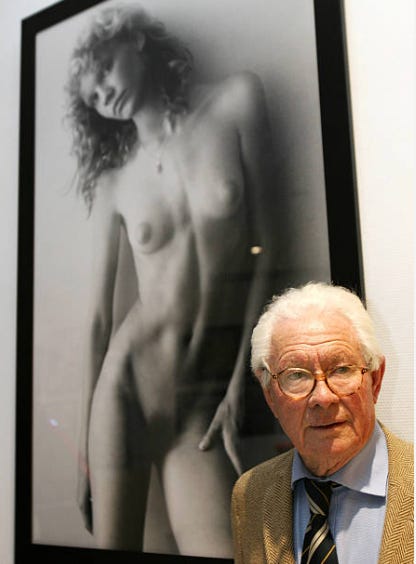
In another, a redacted correspondent sends him a link to an article about Hamilton’s death. There is no comment, just the link.
In a third he’s corresponding with a 15-year girl who tells him about the fun party she just went to.
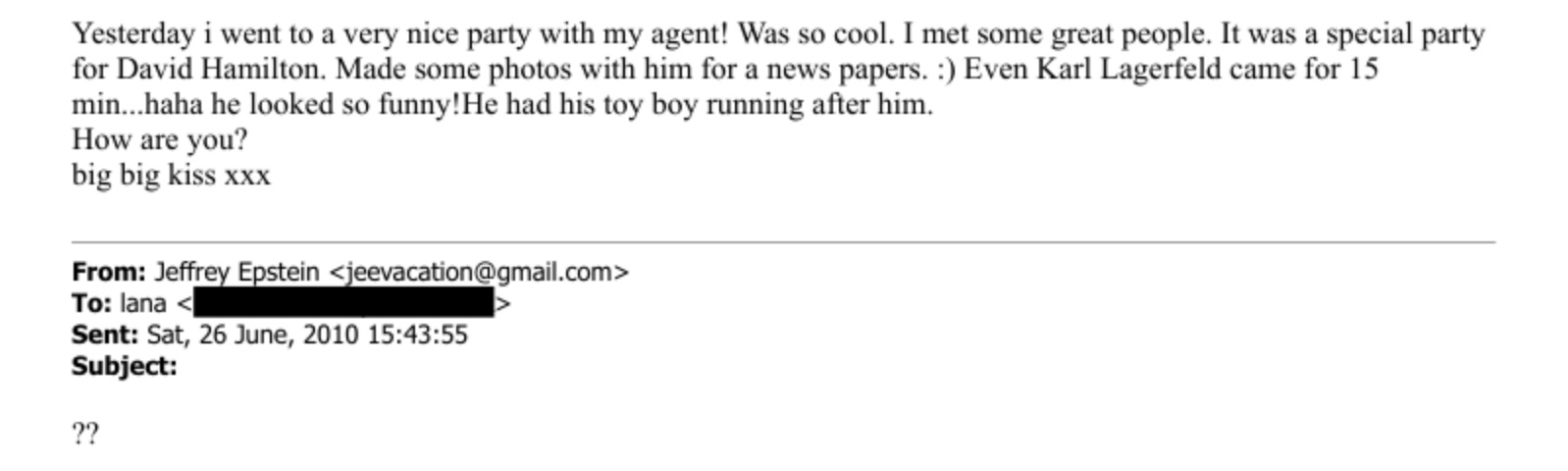
We know she’s 15 because her name wasn’t redacted (I’ve chopped it off the screenshot). But then, that’s par for the course for these documents: only the men’s identities have been diligently obscured. So here I am. Not writing about the FSB-trained government minister who Epstein repeatedly emails and various juicy revelations and connections that I could have scooped the mainstream outlets on.
Instead, I’m writing about David Hamilton, an (alleged) paedophile I once met, 21 years ago.
But I think that’s the point. The revelations of the Epstein files are, I believe, momentous. (And if you’re reading this in America, I have no idea what your press is doing, the New York Times, in particular, has been wholly missing in action.*)
Epstein has given us an extraordinary portal through which we can now see how hostile state influence, criminality and the impunity of the billionaire class are intimately enmeshed. That’s the piece I still want to write. But we can’t understand any of this until we realise that Epstein isn’t just a doorway, he’s also a mirror.
His culture is our culture.
In the UK, a press and political pack is providing a release by baying for the blood of Epstein’s “best pal” Lord Peter Mandelson, but it’s also a way of letting ourselves off the hook.
This was the second last paragraph of my piece in 2005:
“This incident more or less sums up my feelings about the Côte d’Azur, Paris Hilton, Tamara Beckwith, big fat yachts and fatter millionaires. Where’s F Scott Fitzgerald when you need him? He’s dead, that’s where, and in his place there’s only Heat and OK! and Hello!. There’s only pap shots of people getting on and off yachts, and falling in and out of their bikinis. There’s only arms dealers and nudie pics of young girls. It’s all fabulous-fabulous right up to the moment you scratch the surface and something sleazy oozes out.
Today was not the first time I’ve googled David Hamilton in the 20 years since. I understood that he was a rupture, a chink. That’s how I discovered he was an (alleged) child rapist who’d committed suicide. Though Hamilton in common with many predators had already told me exactly who he was.
He also told me that a culture which reveres female youth and innocence despises female age and experience. It disgusts them, scares them. That’s our paedophiliac culture too; misogyny of adult women is the opposite of sexual desire for girls, an inverted mirror.
We are crones, hags, witches. Because we’re a threat. Because we see these men for who they are. Because, except for rare exceptions – the monstrosity that is Ghislaine Maxwell – we are protectors. Of children. Of society. Of a world in which rich men don’t get to act with impunity. Not on our watch.
In 2005, I played David Hamilton’s insults for laughs. Later, those same lines became weapons used against me by the men I investigated in the course of my work. A fire hose of abuse, amplified at scale by technological tools, in what I came to understand – in my rational if not emotional brain – was a massive, relentless coordinated online operation. It was designed to depress and deter and deject me. And it did.
But I was also just another woman online who had it coming.
Epstein’s world is our world. That’s the darkest revelation of these files. He wasn’t an aberration. He was our culture made flesh. A culture that’s now encoded into 1s and 0s and is growing exponentially baked into the algorithms that power our social media platforms, replicated at scale and fed into the large language models that Epstein’s friends are building which are powering our future.
Epstein was a paedophile. And this is Epstein’s world now. We’re all living in it. It’s just that some of us knew that already. That, I think, is why my words wouldn’t come this week. And why other women I know have struggled too. A dark shadow has been exposed that we already knew was there. And in a world in which brutal authoritarianism is the rising political system and the world’s superpower is led by Jeffrey’s friend, the possibility of justice for the victims – any victims – this week feels bleak.
Epstein’s victims, Trump’s victims, Russia’s victims, Israel’s victims. We are in mafia country now. A world of strong men where the rules-based order is dead. Jeffrey Epstein is the symbol of that. And, we now, he also helped create it.
If you’ve read this far, thank you. Without this newsletter, I wouldn’t have written this, and if I hadn’t written it, I wouldn’t have understood it.
We can fight back. We have to. But first we have to see it.
PS. Seeing is believing. Not all of the latest emails have been processed, but if you haven’t seen it an incredible open-source team (thank you Luke Igel, Riley Walz and team, you rock.) They’ve put all of the emails and documents into a mirror of Gmail…that they’ve called Jmail. It shows you the emails as if you are Jeffrey Epstein logged into your own Gmail account and makes it so much easier to search than the DOJ site:
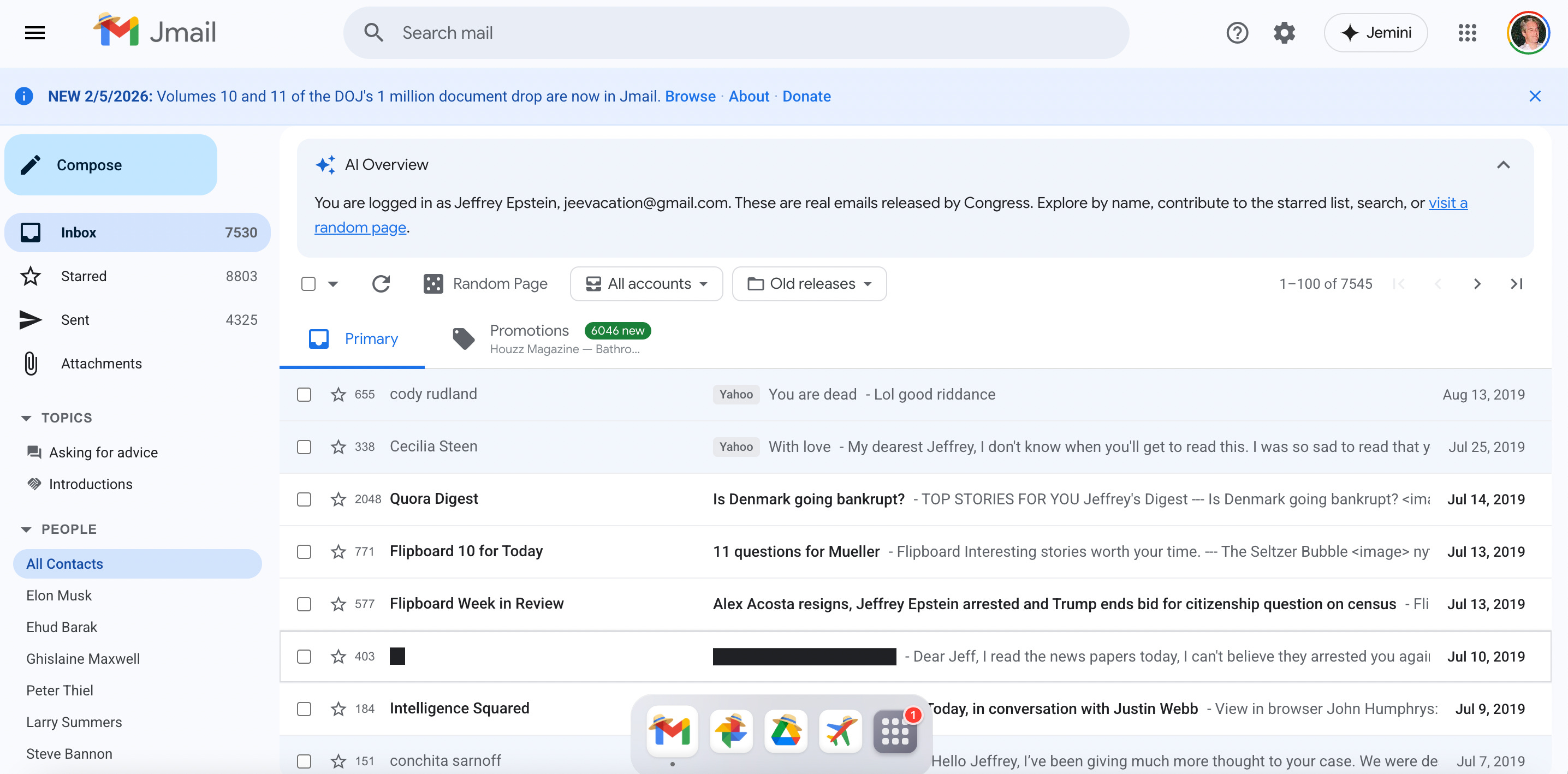
There’s even Jflights and his Jamazon accounts.

This post has been syndicated from How to Survive the Broligarchy, where it was published under this address.