

I started last year by listing my personal resolutions for resistance in 2025. I argued against despair in the face of the second Trump administration, despite the horrors he threatened to unleash. “There’s no reason for resignation,” I wrote, “unless we resign ourselves to failure.”
We’re now almost twelve months into Trump 2.0, and it’s just as bad as we expected. Troops deployed in American city streets, an expanding network of domestic and international concentration camps, a new South American war. A legal observer in Minneapolis shot dead.
Yet everywhere the American regime has flexed its autocratic muscle, it’s been met with resistance. From downtown LA to small town Illinois, everyday people are fighting back. We are propelled forward by generations of struggle, and the struggle continues until we win. The state is now clearer than it’s ever been: oppressed communities and anti-fascist politics are its primary domestic adversaries. We must be equally clear. The American struggle for liberation is only intensifying.
As the year changes, I’m offering, in place of resolutions, a series of farewells. Farewells to those practices I fear are holding are movements back at a time of unprecedented peril and, if we’re successful, promise.
After all, it’s only the close of one year that allows for the birth of another.
Respectability politics

“Respectability politics” emerged as a current within the Black freedom struggle, when thinkers like the early W.E.B. Du Bois assigned an elite “Talented Tenth” of Black Americans with the task of “getting the untalented nine-tenths to rid themselves of bad customs and habits”—all in order to prove themselves worthy of full citizenship rights. Respectability politics blames the oppressed for their own oppression, demanding decorum instead of endorsing the struggle for liberation.
There was once a white conservative version of respectability politics, as well. Right-wingers told us they weren’t against migrants—nation of immigrants and all that—but just concerned about illegal immigration. They told us they didn’t want to force women back in the kitchen, they just worried if feminism had gone too far. They of course weren’t bigoted against all people of color, just holding the line against those kinds of people.
But now, the mask is off. The white right has abandoned its respectability politics to instead openly advocate for male supremacy, white nationalism, and imperial war. This hasn’t hurt them in the slightest; it’s propelled them to unprecedented power.
In 2025, let’s abandon respectability. Let’s be fierce and uncompromising in our defense of the oppressed and our hatred for oppression and exploitation.
Electoralism
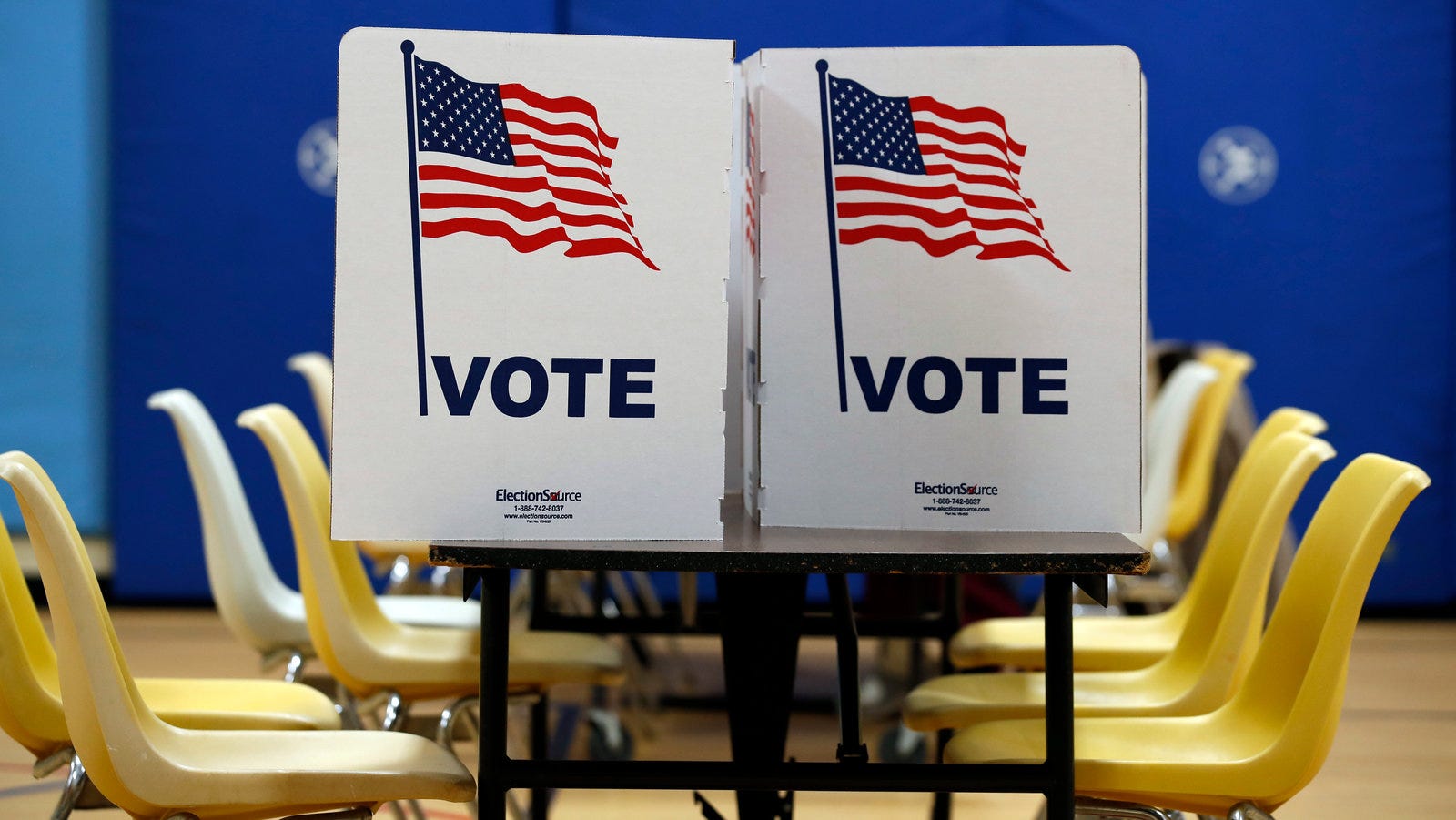
Yes, a midterm upset could tip Congress blue and limit Trump’s ability to terrorize our communities. Yes, some of us are quite excited that a democratic socialist is taking office in America’s largest city.
And yes, we need to abandon electoralism as a strategy for winning the real change we so desperately need.
Every four years, the Democratic Party establishment begs us for one more chance in office. This is the crucial election that will decide the future of our country… but were all the ones that came before it, according to the electoralists. In 2004, it was about the crucial necessity of ending Bush’s global war. In 2008 it was about repudiating his legacy, and in 2012 it was about giving Obama the chance to complete his supposedly progressive agenda. In 2016, 2020, and 2024 it was about defeating Trump, even though the only person to beat him was a senile Zionist border hawk. Each election, every last one of them, was supposedly the most important one of our lives. Each time, there was a slow sucking sound of momentum getting pulled out of autonomous social movements and funneled into the ballot box, most recently the demobilization of the 2020 George Floyd Rebellion.
The question isn’t whether we need to stop the Trump regime. The question is: what kind of power should we build to do so? Is it power mobilized under the rules of the enemy state, power that disappears the day after the election, no matter the result? Or is it the power to defend our communities and fight for liberation no matter who takes office?
Pacifism
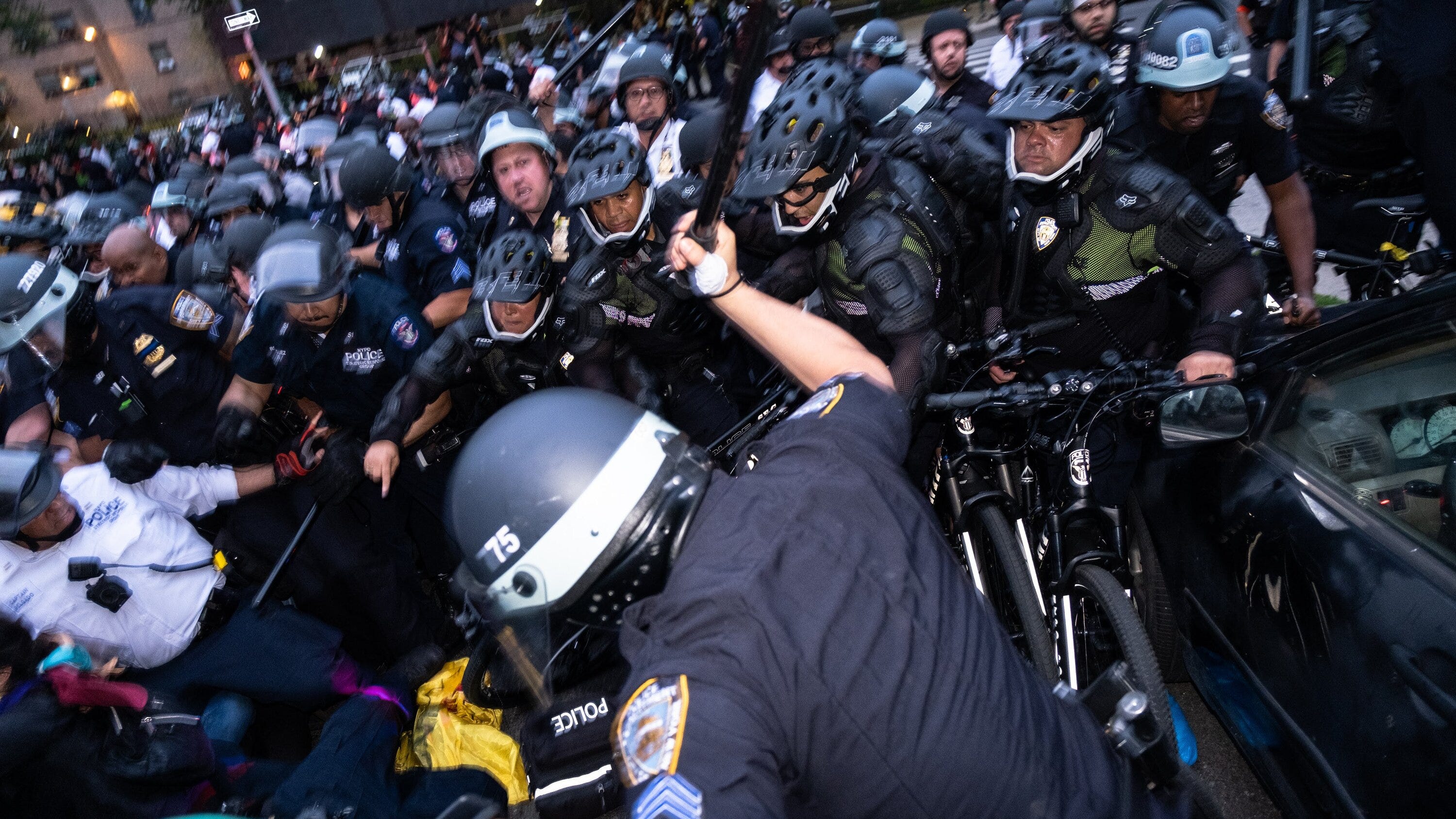
Let me be clear: we all ought to love peace and dialogue in place of coercion and physical force. We should all reject blood-thirsty politics and macho celebrations of violence. But the ideologies of “peaceful protest” and doctrinaire non-violence get deployed in such a way that they don’t prevent physical harm. In fact, they promote it, so long as it’s the coercive violence of law enforcement and the state.
The advocates of “peaceful protest” are often all-to-ready to abandon their compatriots who engage in the metaphorical violence of yelling mean words or throwing ill-advised objects to the very literal violence of arrest, incarceration, and physical injury or death. We need serious, courageous discussions about which tactics are strategically useful. But we can’t do that if our social movements are more focused on devouring their own than fighting their enemies. We can’t win if we rule out physical defense of oppressed communities under attack.
Unarmed protesters have been described as outside agitators, a cancer of social movements, and now, as in the case of Renee Good, domestic terrorists, all narratives that facilitate the wholesale repression and criminalization of entire communities and mass movements.
This is why we need to interrogate the American tradition of liberal political pacifism. Not because we want wanton violence and destruction, but because we oppose the brutal violence being carried out by the most powerful, wealthy, and heavily-armed nation-state on the planet. Our opposition to this violence calls on us to interrupt it—not merely to denounce it but to make it stop.
As novelist Arundhati Roy points out, political “non-violence” is an act of theater that can only be carried out by those with a degree of privilege. “Can the hungry,” she asks, “go on hunger strike?” This theatrical work can only succeed given a receptive audience. “In order for nonviolence to work,” pointed out Kwame Ture (Stokely Carmichael) of the Black Panther Party, “your opponent must have a conscience. The United States has none.”
The era of political theater sufficing in the face of imperial plunder has definitely ended, if indeed it ever existed. To manifest our highest values—of love, of compassion, and yes, of peace—will require not performance for the state but direct action against empire.
This year
Let’s build our networks of care and resistance stronger, deeper, and more resilient.
Let’s become a force equipped to stop the plunder of our communities, the kidnapping our neighbors, the destruction of our worlds.
Let’s win.
This post has been syndicated from In Struggle, where it was published under this address.