
Minnesota did not wake up one morning and decide to be brave. Minnesota was forced into clarity.
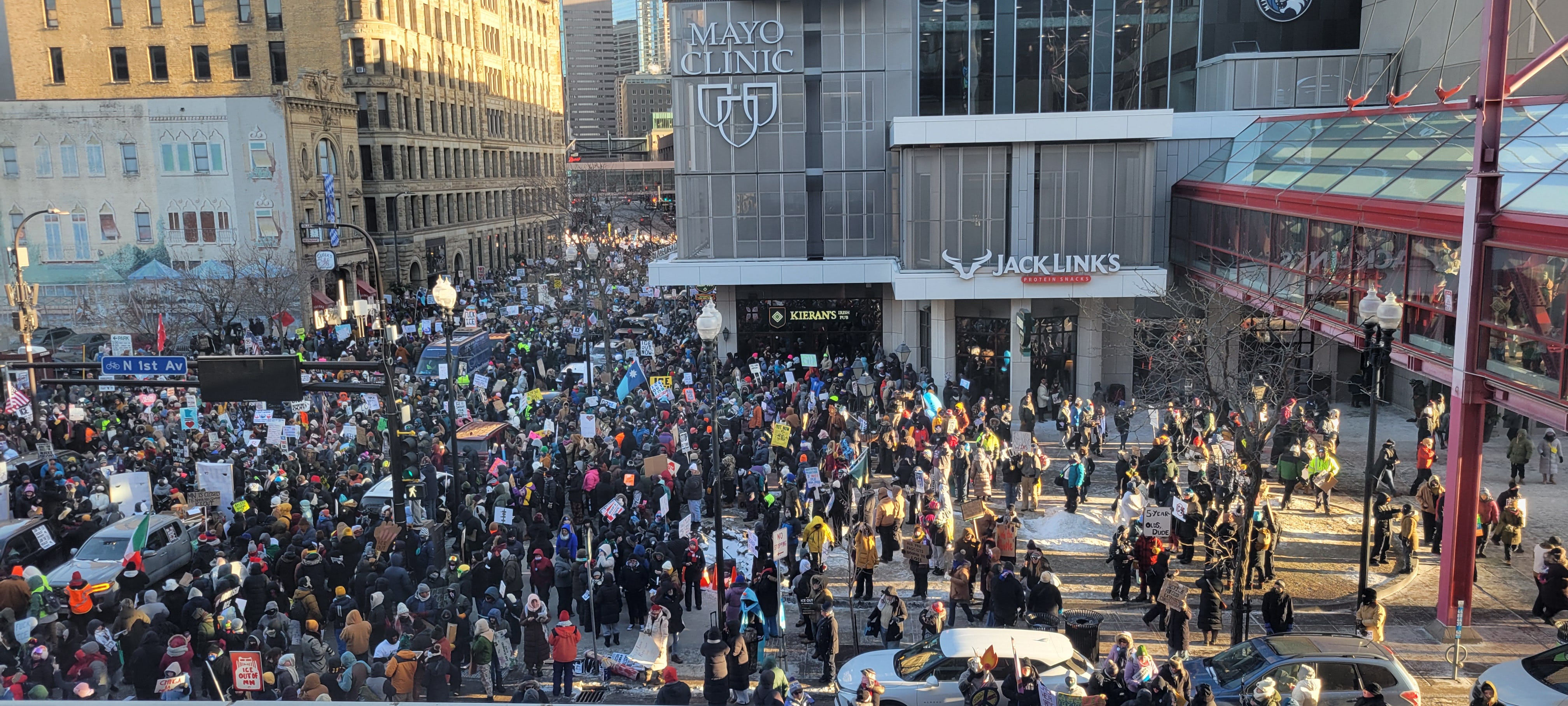
When Renée Good was killed while observing ICE activity in her own neighborhood, the line between “policy debate” and lived danger vanished. When Alex Pretti was killed weeks later, after showing up to protest that first death, the message landed with brutal simplicity: this was not theoretical, and it was not contained. This was a federal enforcement operation moving through ordinary neighborhoods with lethal consequences.
From that moment on, Minnesota stopped acting like this was about persuasion and started acting like it was about protection.
What followed wasn’t chaos. It was organization under pressure. And that’s what other cities need to understand, because this wasn’t a protest cycle. It was a community building a defensive system in real time.
This is how it worked.
DEATH COLLAPSED DENIAL AND FORCED ORGANIZATION
Renée Good was not a professional agitator. She was a neighbor. A mother. A legal observer. Someone doing exactly what communities are told to do when enforcement shows up: watch, document, alert others. Her killing detonated any remaining illusion that compliance or quiet observation guaranteed safety.
Alex Pretti’s death erased the rest. A nurse. A veteran. A person who showed up because silence had already proven deadly. After that, nobody could honestly argue this was about “isolated incidents” or “misunderstandings.” Minnesota saw the pattern forming in real time.
Grief hardened into resolve. Not rage-for-the-camera resolve, but something colder. People understood that if they didn’t build systems fast, more names would follow.
That urgency is what powered everything else.
TURN ANGER INTO ROLES OR IT DEVOURS ITSELF
Minnesota did not ask people to feel more. It asked them to do something specific.
Show up. Observe. Document. Cook. Drive. Translate. Donate. Deliver food. Print signs. Staff hotlines. Share information. Watch kids. Make noise. Stand there and don’t blink.
There was no spectator class. If you were angry, you were handed a task. If you couldn’t be visible, you were still essential. Money counted. Logistics counted. Quiet labor counted. This mattered because movements collapse when people are allowed to turn outrage into guilt instead of action.
Minnesota didn’t let that happen. Everyone had a lane, and the lanes connected.
TRAINING WAS ABOUT DISCIPLINE, NOT HEROICS
Untrained outrage gets people hurt. Minnesota learned that early and refused to romanticize improvisation.
Observer trainings expanded rapidly because people needed something more than slogans. They needed muscle memory. They needed to know how to stand close without escalating, how to document without interfering, how to keep their voice steady when authority started lying loudly and confidently.
Training wasn’t about empowerment theater. It was about preventing panic. It was about making sure no one else died because someone froze, rushed, or guessed wrong in a moment that didn’t allow for guessing.
Discipline became a form of care.
NOISE BROKE ISOLATION, AND ISOLATION IS HOW PEOPLE DIE
The use of whistles didn’t begin in Minnesota, but Minnesota restored their purpose.
When Renée Good blew a whistle, she wasn’t making a statement. She was trying to make sure she wasn’t alone. That distinction matters.
Noise was used to destroy the conditions enforcement relies on. Silence. Surprise. Small moments where no one is watching. One whistle became three. Three became a block awake and recording. Windows opened. Phones came out. ICE lost the ability to operate quietly.
This wasn’t confrontation for sport. It was early warning. It was about collapsing isolation before it turned lethal. And it worked precisely because it was simple, analog, and collective.
Fear thrives in quiet. Power thrives in shadows. Minnesota took both away.
INFORMATION FLOW REDUCED FEAR WITHOUT INVITING CHAOS
Minnesota built information networks that prioritized situational awareness, not spectacle.
ICE-tracking platforms, tip lines, encrypted Signal groups, and neighborhood alerts existed for one reason: to help people decide whether it was safe to leave their house, go to work, pick up their kids, or stay put.
These were not vigilante systems. They were harm-reduction systems. Over time, norms hardened around verification and restraint. Information wasn’t blasted for attention. It moved horizontally, quietly, and with purpose.
For families already living on the edge, uncertainty is the most corrosive force there is. Minnesota reduced uncertainty. That alone kept people functional instead of frozen.
RESISTANCE DID NOT REQUIRE EXPOSURE
This is where Minnesota quietly outperformed almost everyone else.
After the deaths, many people could not safely show up. Undocumented neighbors. Mixed-status families. Disabled people. Elders. Parents with kids. People already targeted once who were not gambling again.
Minnesota did not shame them. It designed around them.
Food banks and delivery networks moved resources toward people instead of forcing people toward risk. Book drives stabilized children whose routines had shattered. Online trainings and briefings meant knowledge spread without bodies in danger. Virtual learning kept people connected without requiring visibility.
Staying home was treated as a survival strategy, not a moral failure. That preserved trust, and trust preserved participation.
A movement that only works for the fearless is a movement that shrinks. Minnesota widened the circle.
CARE WAS A RETENTION STRATEGY, NOT A SIDE PROJECT
Mutual aid was not charity cosplay. It was logistics.
People kept showing up because they were fed, supported, and given space to breathe. Community nights weren’t detours. They were pressure valves. Places to print signs, swap information, recharge, and remember that resistance doesn’t have to feel like slow self-destruction.
Care and confrontation shared calendars, rooms, and networks. Someone might arrive for screen-printing and leave with a whistle, a hotline number, and a plan for Saturday morning.
That overlap wasn’t accidental. It was how the system held.
CORPORATE COLLABORATION WAS MADE PUBLIC AND COSTLY
Minnesota didn’t treat ICE as a rogue actor. It treated it as a system with dependencies.
Hotels. Stores. Rental cars. Corporate cooperation. These were pressure points, and Minnesota pressed them.
Target. Home Depot. Hilton. Enterprise. These weren’t abstract villains. They were local institutions making local choices with local consequences. Protests happened where people could see them: storefronts, headquarters, hotel entrances, rental counters.
Boycotts were not moral purity tests. They were leverage. Temporary, targeted pressure tied to specific behavior. Stop supporting enforcement operations and the pressure eases. Keep going and the noise continues.
Workers were not blamed. Decisions were traced upward, where they belonged. That discipline prevented companies from hiding behind employees and kept labor allies in the fold.
Once collaboration became visible, neutrality collapsed.
WHEN A CHURCH BECAME A SITE OF CONFRONTATION
The conflict didn’t stay politely contained.
When community leaders including Nekima Levy Armstrong and others protested inside a church service, it wasn’t about shock value. It was about refusing to let moral authority hide behind ritual. It forced a question into sacred space: what does sanctuary mean when violence is happening outside the doors?
The arrests that followed made something else clear. Resistance in Minnesota was no longer confined to approved protest zones. It had entered everyday civic life. Churches. Neighborhoods. Businesses. That expansion unnerved power because it removed safe compartments.
The message was unmistakable: there would be no comfortable distance from the consequences.
DOCUMENTATION OWNED THE TIMELINE
Minnesota did not wait for permission to tell its story.
Observers documented events as they happened and forced them into public view before official statements could scrub them clean. This wasn’t about virality. It was about control. When the story starts on the street instead of at a podium, spin arrives late and weakened.
Owning the timeline meant owning reality.
BACKLASH WAS EXPECTED, NOT FEARED
Intimidation came. Arrests came. Violence came. Grief came.
Minnesota didn’t act shocked. Legal support was ready. Media pressure escalated. Solidarity deepened. Each attempt to scare people off taught them how to protect each other better.
Repression didn’t end the response. It widened it.
THIS WORKED BECAUSE IT WAS INFRASTRUCTURE, NOT SPECTACLE
Minnesota didn’t “win” anything through a single march or viral moment. It built systems people could plug into on a random Tuesday or a sleepless night. Systems that didn’t require heroics, just consistency. Systems that assumed fear and designed around it instead of shaming it.
Other cities keep asking how to replicate this.
Here’s the unglamorous truth.
You don’t need better slogans.
You need training.
You need redundancy.
You need care.
You need information discipline.
You need pressure applied where power depends on cooperation.
You need repetition.
Minnesota didn’t fight ICE as an idea. It fought ICE as a system.
And that’s why the response held.
That’s the manual.
This post has been syndicated from CLOSER TO THE EDGE, where it was published under this address.