
Friends,
Good news.
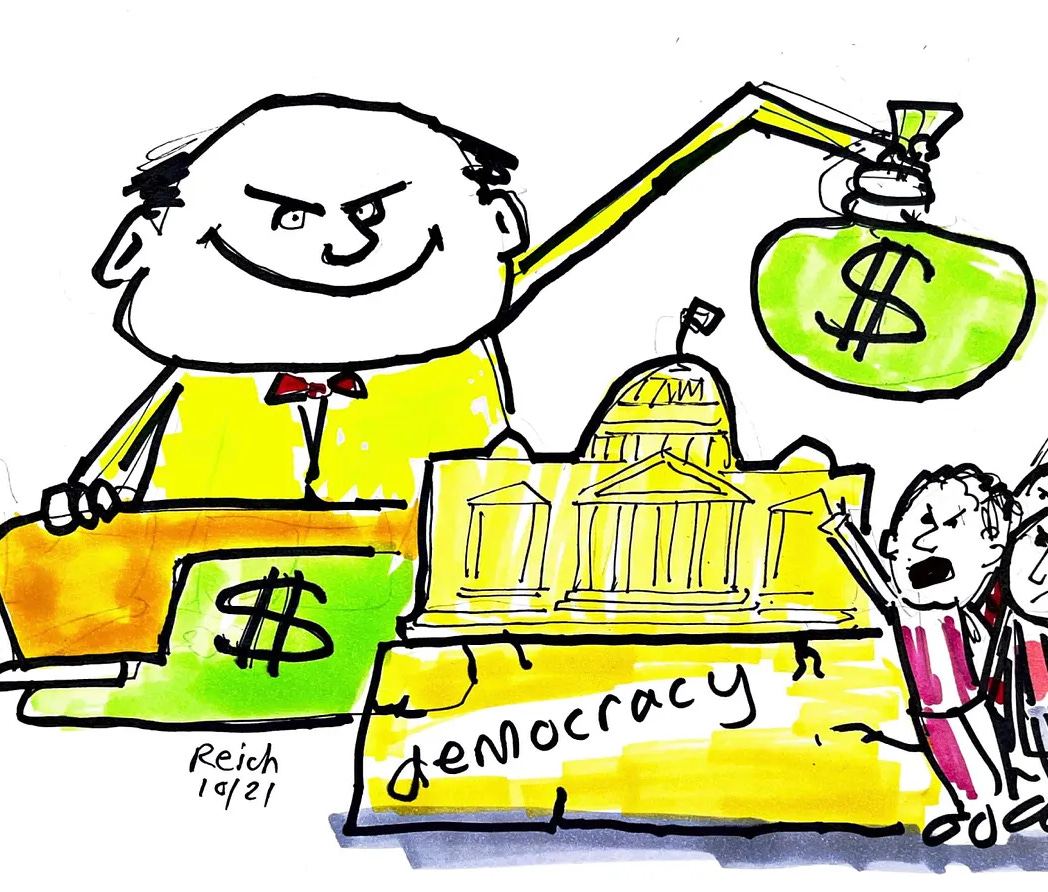
You may remember that back in November I mentioned that Montana was considering a bill that would effectively negate the Supreme Court’s awful Citizens United decision, which held that corporations are people under the First Amendment and therefore entitled to spend unlimited amounts of corporate money in elections.
A similar bill has just been introduced in California.
Montana is a great and beautiful state. Some 1,145,000 people live there. But California! Almost 40 million people live in the Sunshine State. If California were an independent country, it would have the fourth-largest economy in the world (behind Germany and ahead of Japan).
So the possibility that California might pass this legislation is a very big deal.
As you know, corporate political spending was growing before Citizens United, but the decision opened the floodgates to the unlimited super PAC spending and undisclosed dark money we suffer from today.
Between 2008 and 2024, reported “independent” expenditures by outside groups exploded more than 28-fold — from $144 million to $4.21 billion. Unreported money also skyrocketed, with dark money groups spending millions influencing the 2024 election.
Most people assume that the only way to stop corporate and dark money in American politics is either to wait for the Supreme Court to undo Citizens United (we could wait a very long time) or amend the U.S. Constitution (which is extraordinarily difficult).
But there’s another way, and there’s a good chance it will work. It will be on the ballot next November in Montana. And there’s now a chance California could enact it!
As I’ve pointed out, individual states have the authority to limit corporate political activity and dark money spending, because states determine what powers corporations have.
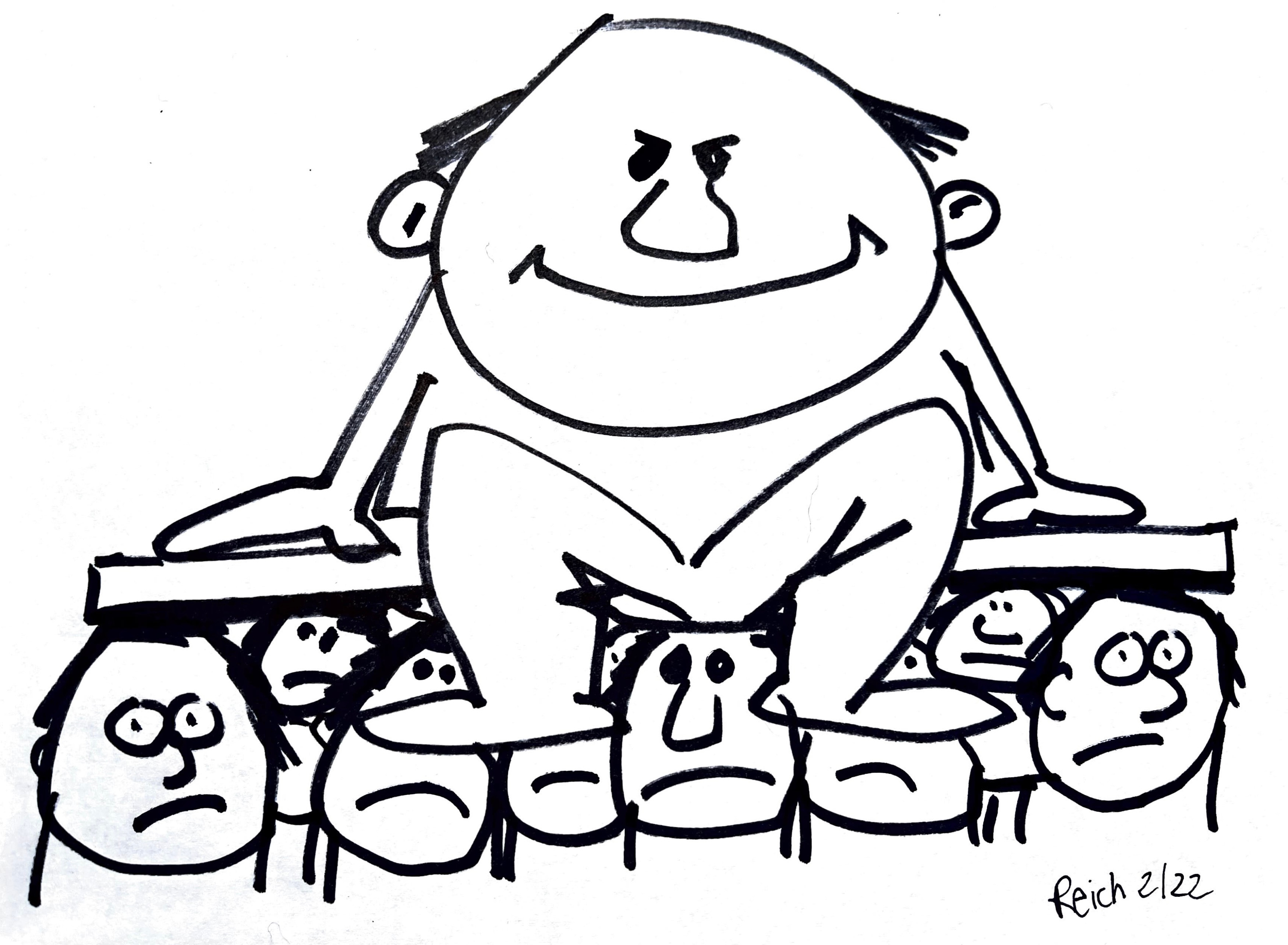
In American law, corporations are creatures of state laws. For more than two centuries, the power to define their form, limits, and privilege has belonged only to the states.
Corporations have no powers at all until a state government grants them some. In the 1819 Supreme Court case Trustees of Dartmouth College v. Woodward, Chief Justice John Marshall established that:
“A corporation is an artificial being, invisible, intangible, and existing only in contemplation of law. Being the mere creature of law, it possesses only those properties which the charter of its creation confers upon it, either expressly, or as incidental to its very existence….The objects for which a corporation is created are universally such as the government wishes to promote. They are deemed beneficial to the country; and this benefit constitutes the consideration, and, in most cases, the sole consideration of the grant.”
States don’t have to grant corporations the power to spend in politics. In fact, they can decide not to give corporations that power.
This isn’t about corporate rights, as the Supreme Court determined in Citizens United. It’s about corporate powers.
When a state exercises its authority to define corporations as entities without the power to spend in politics, it will no longer be relevant whether corporations have a right to spend in politics — because without the power to do so, the right to do so has no meaning. (Delaware’s corporation code already declines to grant private foundations the power to spend in elections.)
Importantly, a state that no longer grants its corporations the power to spend in elections also denies that power to corporations chartered in the other 49 states, if they wish to do business in that state.
And what corporation doesn’t want to do business in California?
All a state needs to do is enact a law with a provision something like this:
“Every corporation operating under the laws of this state has all the corporate powers it held previously, except that nothing in this statute grants or recognizes any power to engage in election activity or ballot-issue activity.”
Sound farfetched? Not at all.
The argument is laid out in a paper that the Center for American Progress published last fall. (Kudos to CAP and the paper’s author, Tom Moore, a senior fellow at CAP who previously served as counsel and chief of staff to a longtime member of the Federal Election Commission.)
Which is exactly what the new California bill does. Here it is: AB 1984. (I kind of like the name.) You can find the text and status of the bill here.
The heroes of the day are Assemblymember Chris Rogers and Senator Mike McGuire, who have stepped up to sponsor and co-author the measure, respectively.
I hope Gavin Newsom gets 100 percent behind this effort. If he has his eye on the White House in 2028, this would be a feather in his electoral cap. The Citizens United decision is enormously unpopular. Some 75 percent of Americans disapprove of it.
It’s time to make Citizens United history. California (and Montana) can lead the way.
This post has been syndicated from Robert Reich, where it was published under this address.